The flag of Antarctica, specifically the True South design, features a white peak representing the continent's mountains and icebergs set against a dark sky. The central peak casts a shadow that forms a compass arrow pointing south, symbolizing the legacy of exploration and the continent's geographic position. Together, the central shapes create a diamond, which represents the hope for continued peace, discovery, and international cooperation.
Colors & Symbols
The flag uses navy blue and white to represent the extreme environment of the polar region. Navy blue symbolizes the long winter nights of the polar darkness, while white represents the vast expanses of ice, snow, and the continuous light of the polar summer. These two colors are chosen for their high contrast and their ability to remain visible in harsh weather conditions.
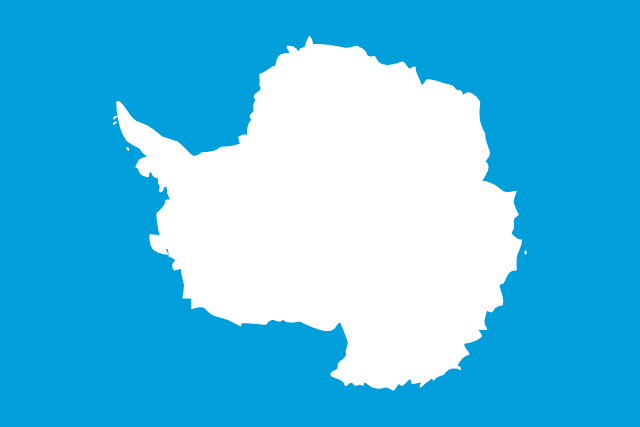
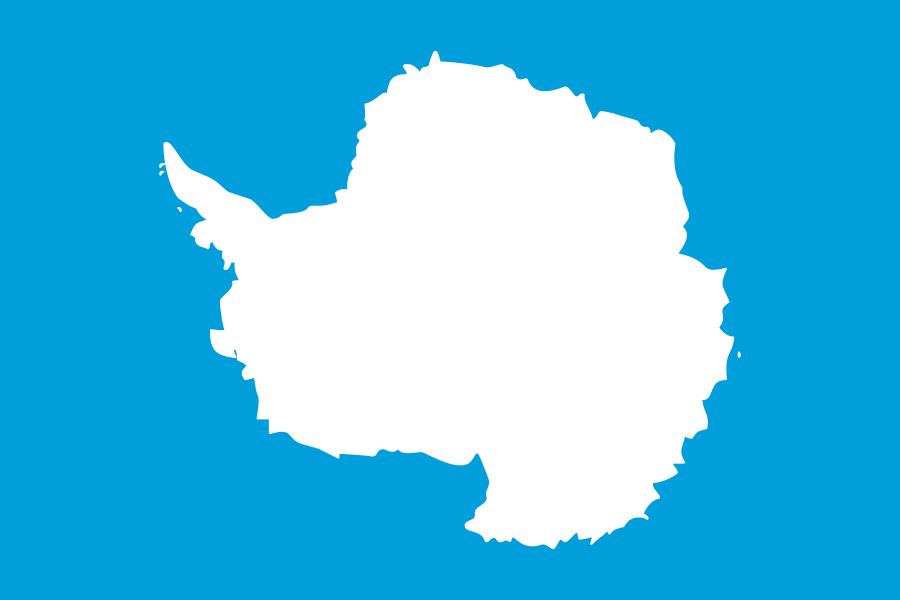
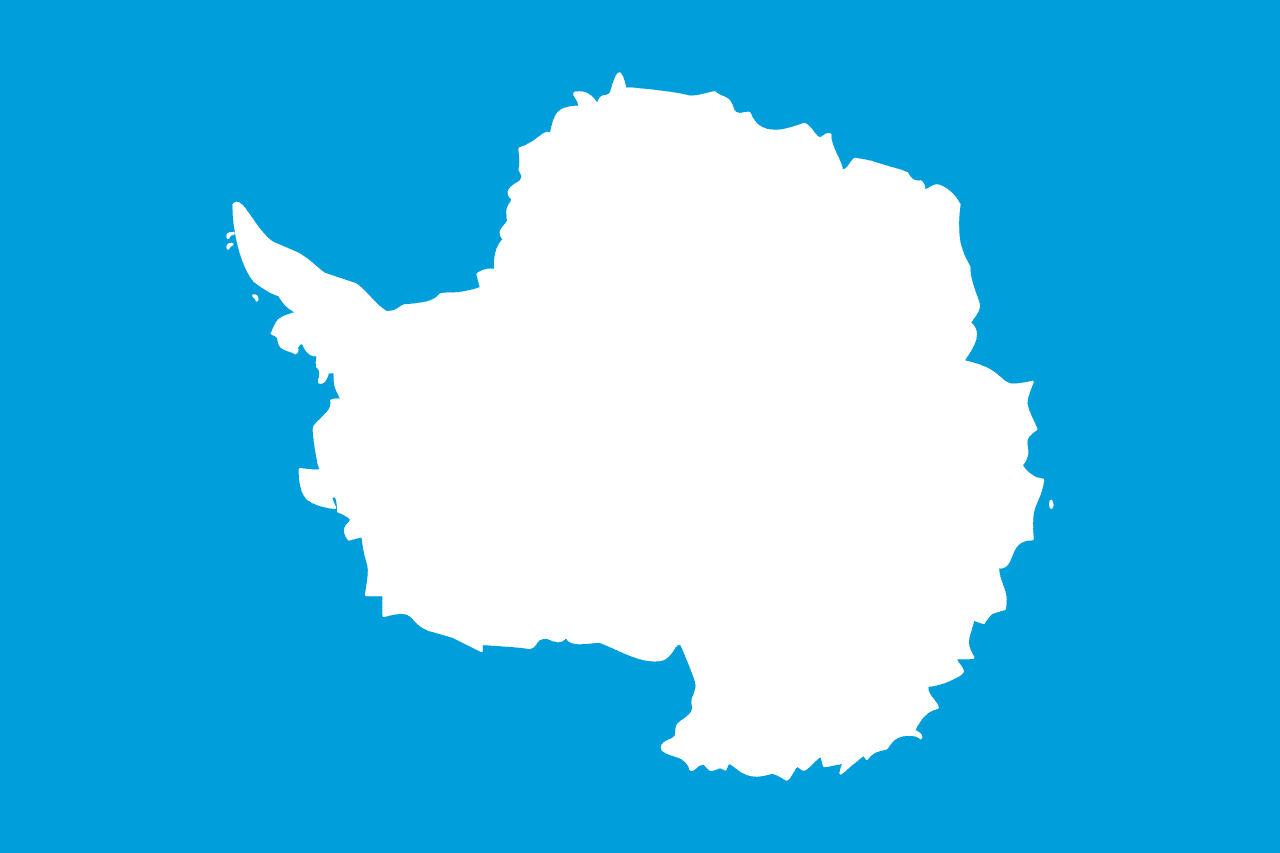
Because Antarctica is not a sovereign state, it has no single official government flag, leading to several historical proposals. Vexillologist Whitney Smith proposed an orange flag in 1978 for high visibility, while Graham Bartram designed a blue map based flag in 1996 that was inspired by the United Nations. The True South design was created in 2018 and quickly gained formal support from national Antarctic programs and researchers as a unified symbol.
Frequently Asked Questions
Antarctica's current flag was officially adopted on 2020.
Antarctica's flag has an official proportion of 3:5.
There is no single official national flag because Antarctica is not a country, but the True South design is the most widely recognized and used representation today.
Proposed by Whitney Smith in 1978, the orange flag was designed for high visibility in the snow and featured symbols for the Antarctic Circle and human protection of the environment.
The Antarctic Treaty flag features a white silhouette map of the continent on a blue background and is the official emblem used by the organizations that manage the continent's international affairs.
These colors represent the unique light cycles of the South Pole, specifically the long periods of total darkness in winter and the reflective ice and constant daylight in summer.
🍪
Cookie Preferences
We use cookies to analyze traffic and improve your experience. No personal data is sold or shared with advertisers.
We use Google Analytics to understand how visitors use WorldStats. This helps us improve content and performance. Analytics cookies track page views and session data — no personally identifiable information is collected. You can change your preference at any time from the footer.