
Flag of Benin
🇧🇯
Flag Meaning
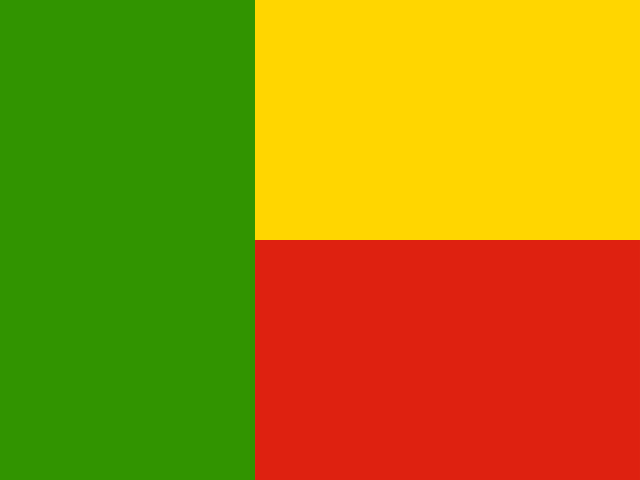
The flag of Benin features the Pan African colors, which represent the unity and liberation of the African continent. The vertical green band stands for hope and the southern vegetation, while the horizontal yellow and red bands signify national wealth and the bravery of the Beninese people.
Colors & Symbols
Green symbolizes the hope of a new revival and the lush palm groves of the south. Yellow represents the nation's prosperity and the sun-drenched savannas of the north. Red commemorates the courage of the ancestors and the blood shed to achieve and protect national independence.
Adopted 1959 (re-adopted in 1990)
Proportions 2:3
Download
Country Statistics
Capital Porto-Novo
Population 13M
Region Africa
ISO-2 BJ
Neighboring Flags
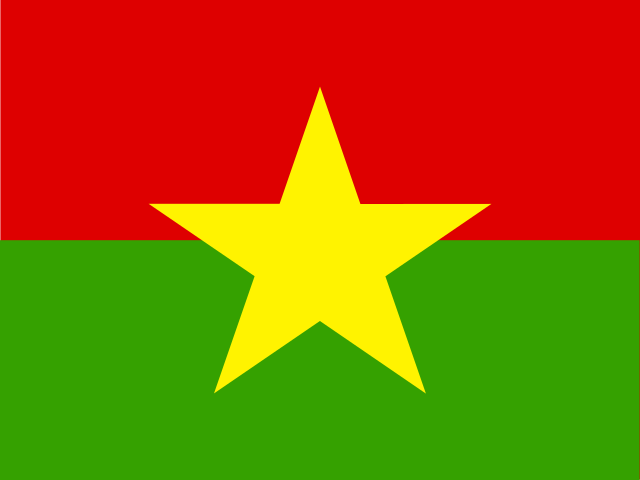
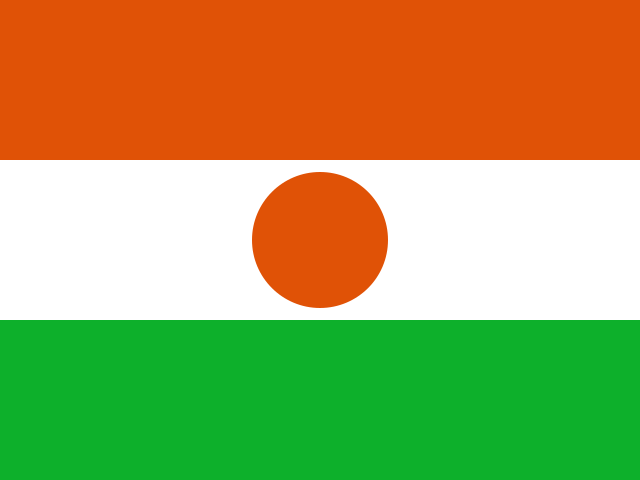
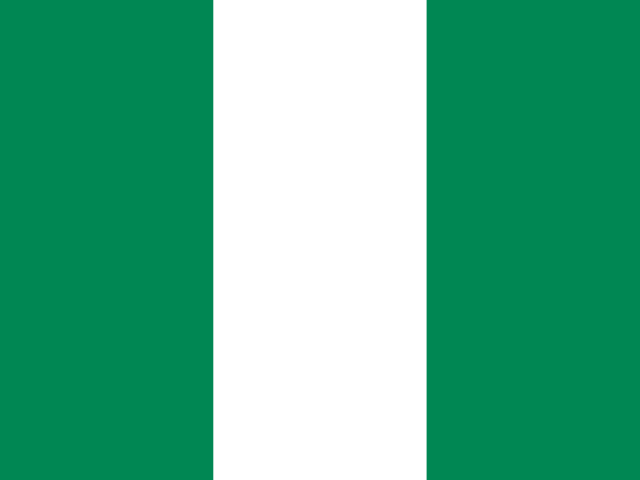
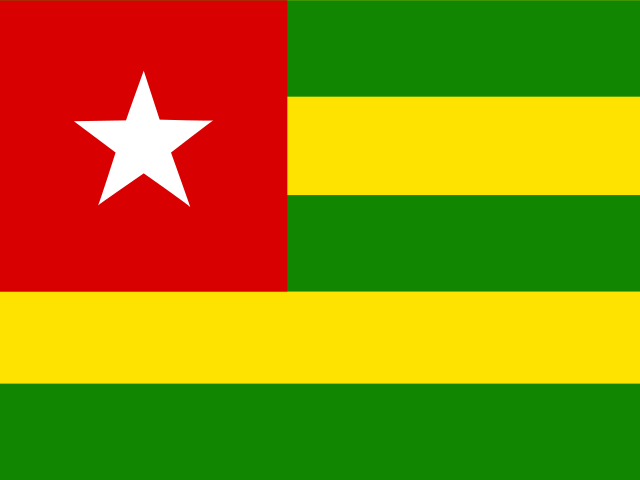

Flag History
Initially adopted when the nation was known as Dahomey, the flag was replaced in 1975 by a green field with a red star during a period of Marxist rule. This socialist emblem was used for fifteen years until the country returned to a multi-party democracy and restored the original design.
Frequently Asked Questions
Benin's current flag was officially adopted on 1959 (re-adopted in 1990).
Benin's flag has an official proportion of 2:3.
Green signifies hope and nature, yellow stands for prosperity and northern savannas, and red represents the courage of the nation's ancestors.
The flag was changed to a green field with a red star to reflect the Marxist-Leninist ideology of the government of the People's Republic of Benin.
Yes, the current flag is the same design originally adopted in 1959, which was reinstated in 1990 after a period of political change.
The flag uses red, yellow, and green, which are the traditional Pan African colors symbolizing African solidarity and independence.