
Flag of Bulgaria
🇧🇬
Flag Meaning
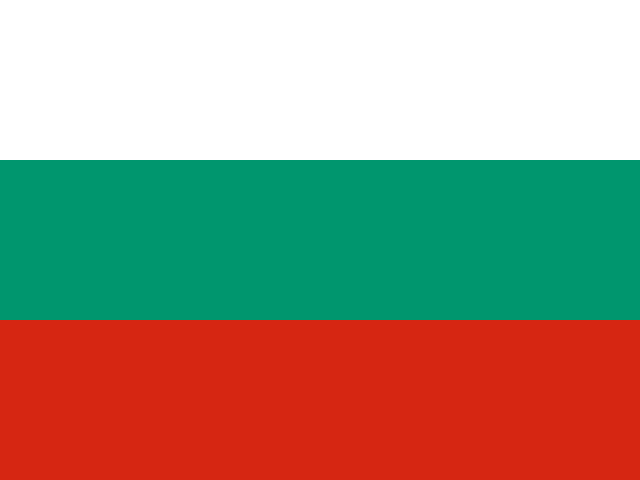
The national flag of Bulgaria is a tricolor symbol that represents the spirit and values of the nation. It serves as a visual testament to the history of struggle, the natural beauty of the land, and the aspirations for a peaceful and sovereign future. The simple arrangement of horizontal stripes reflects a long standing commitment to national unity and independence.
Colors & Symbols
The white stripe at the top represents peace, love, and freedom, reflecting the spiritual aspirations of the people. The middle green stripe symbolizes the agricultural wealth, the fertile plains, and the lush forests of the Bulgarian landscape. The bottom red stripe stands for the bravery and the blood shed by those who fought for national sovereignty.
Adopted 1879
Proportions 3:5
Download
Country Statistics
Capital Sofia
Population 6.4M
Region Europe
ISO-2 BG
Neighboring Flags
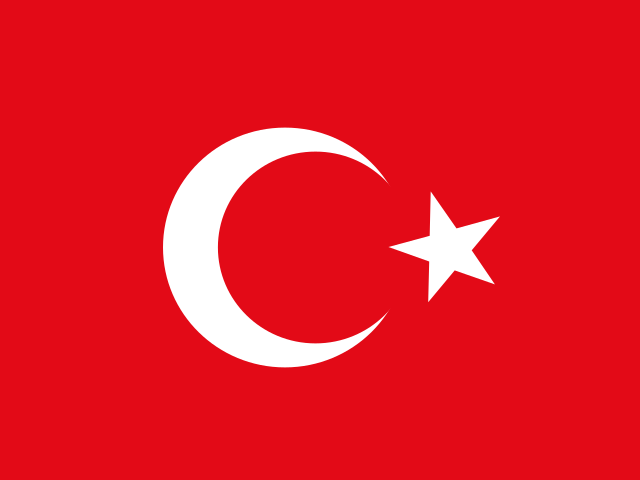

Flag History
The flag was first adopted in 1879 following the liberation from the Ottoman Empire during the Russo Turkish War. While drawing inspiration from the Pan Slavic colors, the design replaced the traditional blue stripe with green to highlight the nation's agrarian roots and natural scenery. For several decades during the twentieth century, the flag featured a socialist coat of arms in the upper corner, but this was removed in 1990 to restore the original tricolor design.
Frequently Asked Questions
Bulgaria's current flag was officially adopted on 1879.
Bulgaria's flag has an official proportion of 3:5.
The green stripe was chosen to distinguish Bulgaria from other Slavic nations and to represent the vital importance of its agriculture and natural landscapes.
The national flag is defined by a rectangular shape with a width to length proportion of 3 to 5 according to official government standards.
Yes, for a period during the middle of the twentieth century, a state coat of arms was positioned in the white stripe, but it was removed after political changes in the early 1990s.
White stands for peace and freedom, green represents the fertility of the land and nature, and red symbolizes the courage and sacrifice of the people.