

Flag of Burundi
🇧🇮
Flag Meaning
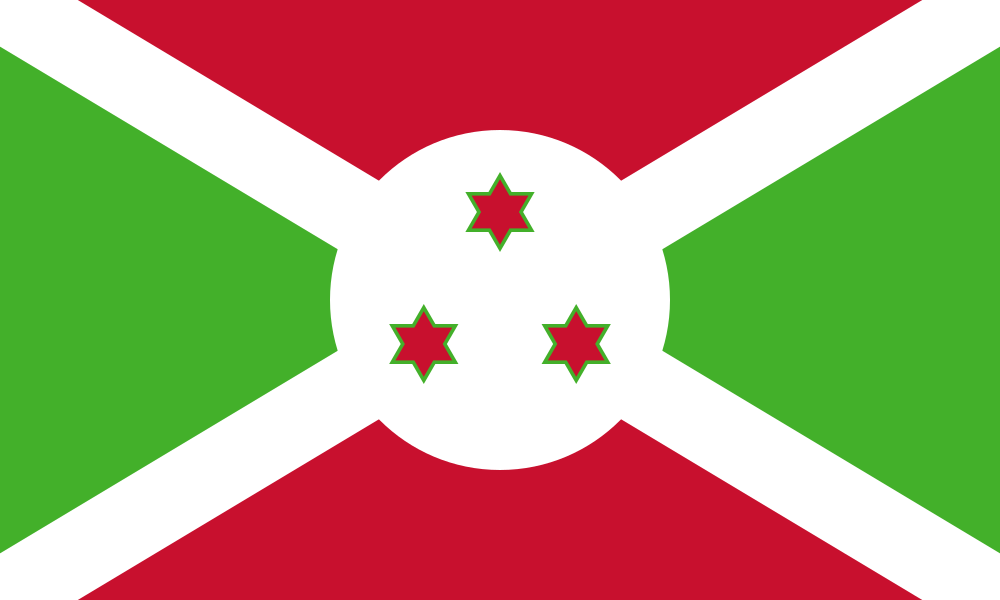
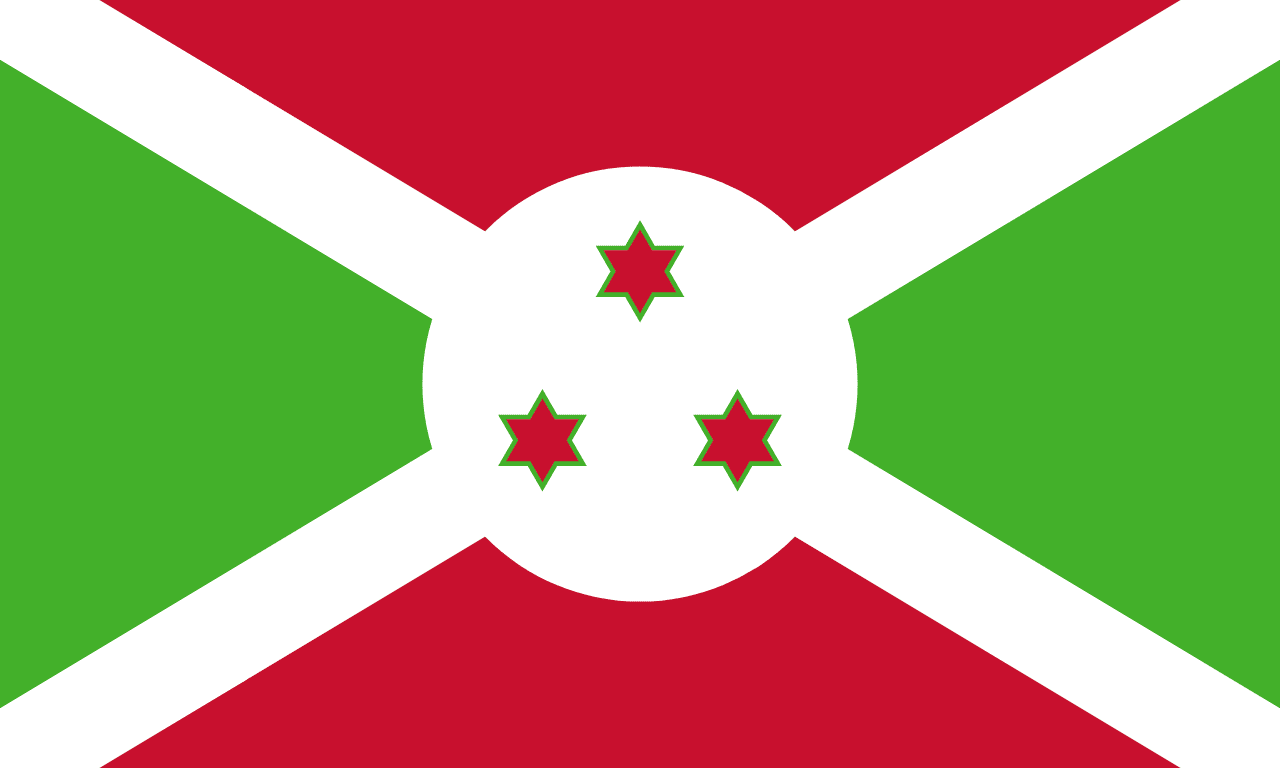
The flag of Burundi features a white diagonal cross known as a saltire which symbolizes peace and divides the background into four distinct sections. At the center of the flag is a white disk containing three red six pointed stars that represent the three major ethnic groups of the nation and the three pillars of the national motto which are unity, work, and progress.
Colors & Symbols
Red represents the blood shed during the struggle for independence and the resilience of the people. Green signifies hope for future development and the nation's vast agricultural resources, while white symbolizes purity and the desire for national peace.
Adopted 1967
Proportions 3 to 5
Download
Country Statistics
Capital Gitega
Population 12M
Region Africa
ISO-2 BI
Neighboring Flags
 COD
COD  RWA
RWA  TZA
TZA Flag History
Upon gaining independence in 1962, the original flag featured a traditional royal drum called a karyenda and a sorghum plant in the central disk. Following the transition from a monarchy to a republic, the royal symbols were removed and eventually replaced by the three stars to reflect a new national identity and motto. The current proportions were officially standardized by a presidential decree in the early 1980s.
Frequently Asked Questions
Burundi's current flag was officially adopted on 1967.
Burundi's flag has an official proportion of 3 to 5.
The stars symbolize the three primary ethnic groups of Burundi—the Hutu, Tutsi, and Twa—as well as the national motto of Unity, Work, and Progress.
The drum, or karyenda, was a symbol of the Burundian monarchy and was removed after the monarchy was abolished and the country became a republic.
The white diagonal cross, or saltire, serves as a symbol of peace and is a central design element that separates the red and green fields.
While the design is unique, some historians suggest the saltire pattern may have been inspired by the Cross of Burgundy which was used during the colonial period.