
Flag of Chile
🇨🇱
Flag Meaning
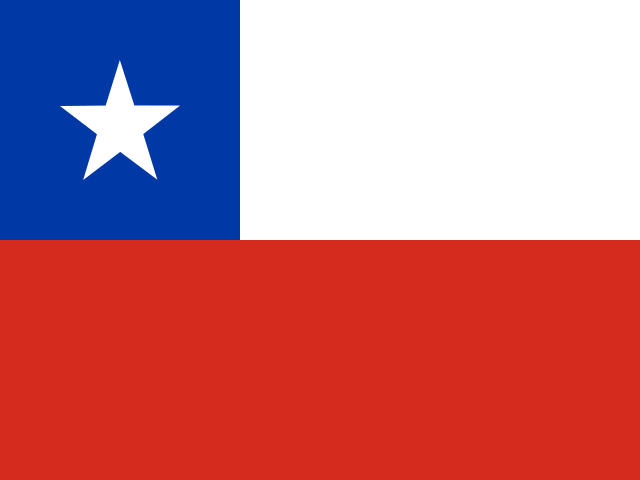
The flag of Chile features a single five pointed star that serves as a symbol of the nation's independence and its guide toward progress and honor. Known as the Lone Star, the design reflects the republican ideals of liberty and sovereignty that emerged during the country's struggle for freedom.
Colors & Symbols
The blue square represents the clear skies and the Pacific Ocean, while the white horizontal band symbolizes the snow covered peaks of the Andes Mountains. The red band at the bottom commemorates the blood shed by heroes who fought to secure the nation's independence.
Adopted 1817
Proportions 2 : 3
Download
Country Statistics
Capital Santiago
Population 20M
Region Americas
ISO-2 CL
Neighboring Flags

Flag History
The first national banner, known as the Flag of the Old Fatherland, featured blue, white, and yellow stripes before being replaced by the Transition Flag. The current design was officially established following the victory at the Battle of Chacabuco and was influenced by the flags of indigenous Mapuche warriors.
Frequently Asked Questions
Chile's current flag was officially adopted on 1817.
Chile's flag has an official proportion of 2 : 3.
The flag is widely known as La Estrella Solitaria, which translates to the Lone Star.
Yes, the Chilean flag was adopted in 1817, which is over twenty years before the Texas flag was officially introduced in 1839.
Beyond being a guide to progress, the star is historically linked to the planet Venus, which held significant meaning for the indigenous Mapuche people.
The design is credited to Antonio Arcos or Gregorio de Andia y Varela at the request of Jose Ignacio Zenteno.