The flag of Costa Rica represents the nation's enduring commitment to peace, democracy, and the pursuit of social progress. Its horizontal stripes and choice of colors reflect a deep connection to the natural world and the liberal ideals of the nineteenth century. The design serves as a powerful symbol of national identity and historical continuity for the Central American republic.
Colors & Symbols
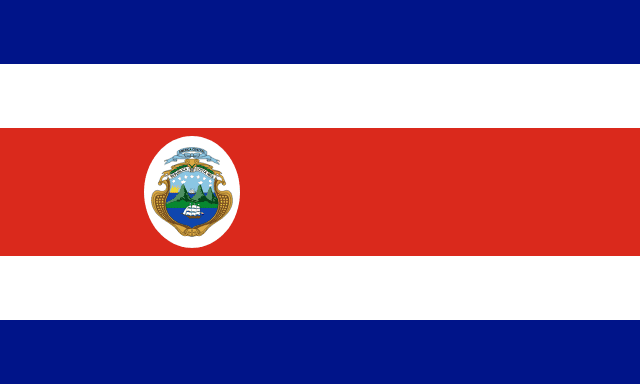
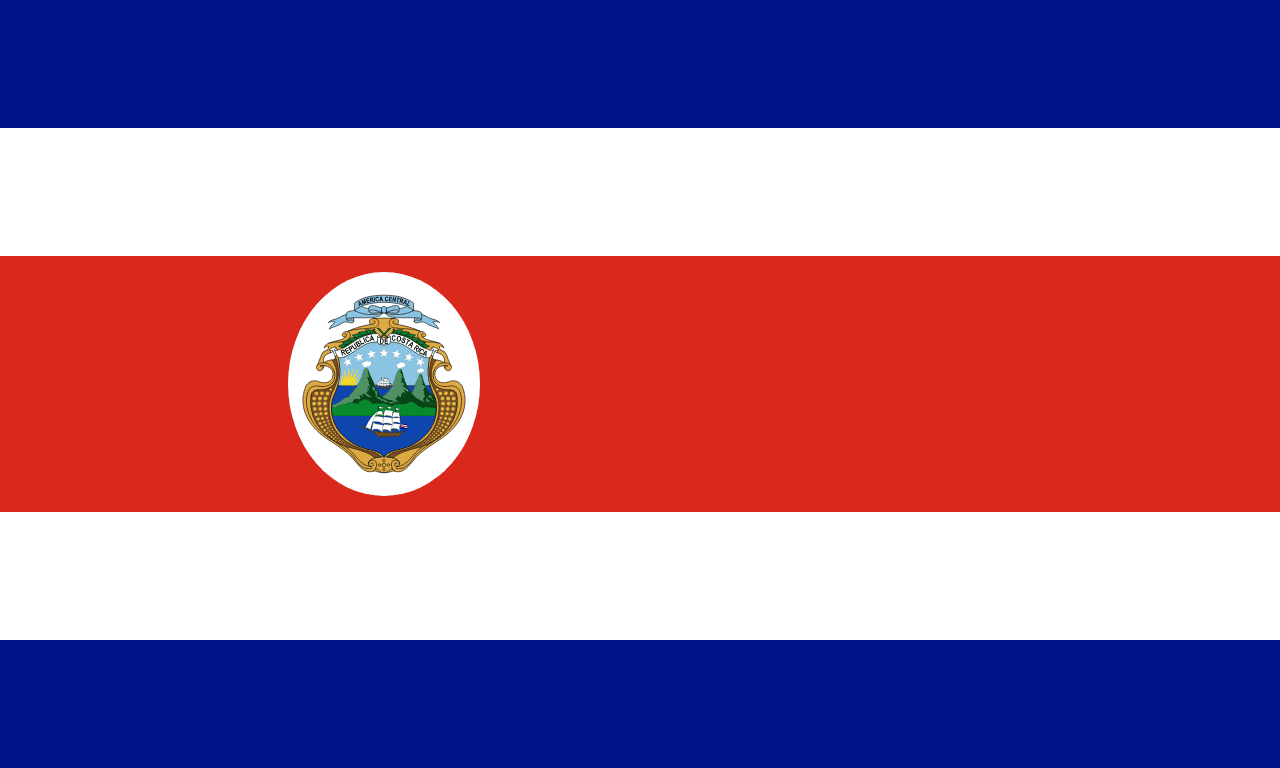
Blue signifies the sky, intellectual thought, and the vast opportunities found within the nation's borders. White represents peace, happiness, and the wisdom that guides the country's decisions. Red stands for the warmth and generosity of the people, as well as the blood shed by those who defended the nation's independence.
The current tricolor design was created in 1848 by Pacífica Fernández Oreamuno, the wife of President José María Castro Madriz, who was inspired by the ideals of the French Revolution. Before this adoption, Costa Rica utilized variations of the blue and white horizontal stripes associated with the Federal Republic of Central America. The national coat of arms displayed on the state flag has evolved over time, with modifications in the twentieth century added to reflect the current number of provinces.
Frequently Asked Questions
Costa Rica's current flag was officially adopted on 1848.
Costa Rica's flag has an official proportion of 3:5.
The flag was designed by Pacífica Fernández Oreamuno, the First Lady of Costa Rica, in 1848, making her one of the few women to design a national flag during that era.
The central red stripe is intentionally designed to be double the width of the other stripes to emphasize the strength, energy, and vibrancy of the Costa Rican people.
The seven stars represent the seven provinces of the country: San José, Alajuela, Cartago, Heredia, Guanacaste, Puntarenas, and Limón.
Yes, the civil flag used by the general public consists only of the five horizontal stripes, while the state flag used by government institutions includes the national coat of arms.
The three volcanoes represent the three main mountain ranges of Costa Rica, situated between the Pacific Ocean and the Caribbean Sea.
🍪
Cookie Preferences
We use cookies to analyze traffic and improve your experience. No personal data is sold or shared with advertisers.
We use Google Analytics to understand how visitors use WorldStats. This helps us improve content and performance. Analytics cookies track page views and session data — no personally identifiable information is collected. You can change your preference at any time from the footer.


 NIC
NIC  PAN
PAN