
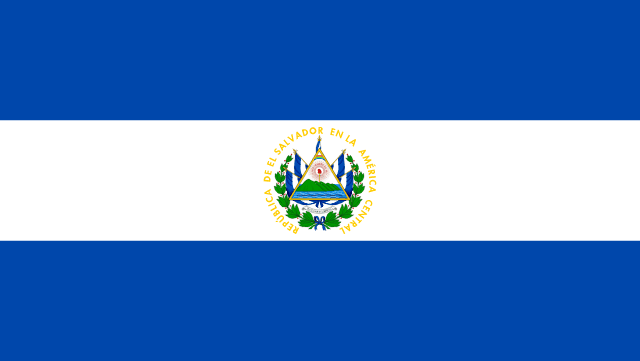
Flag of El Salvador
🇸🇻
Flag Meaning
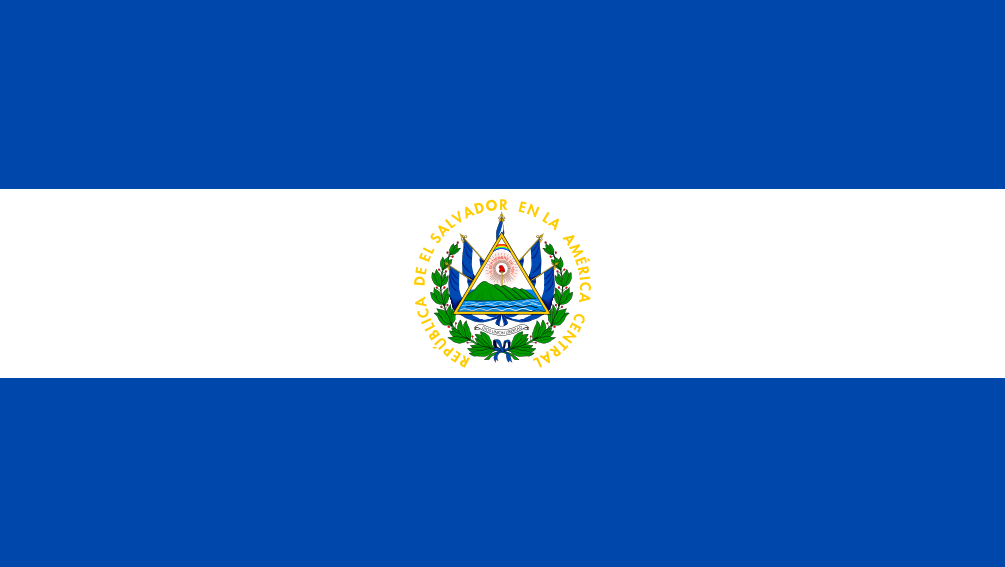
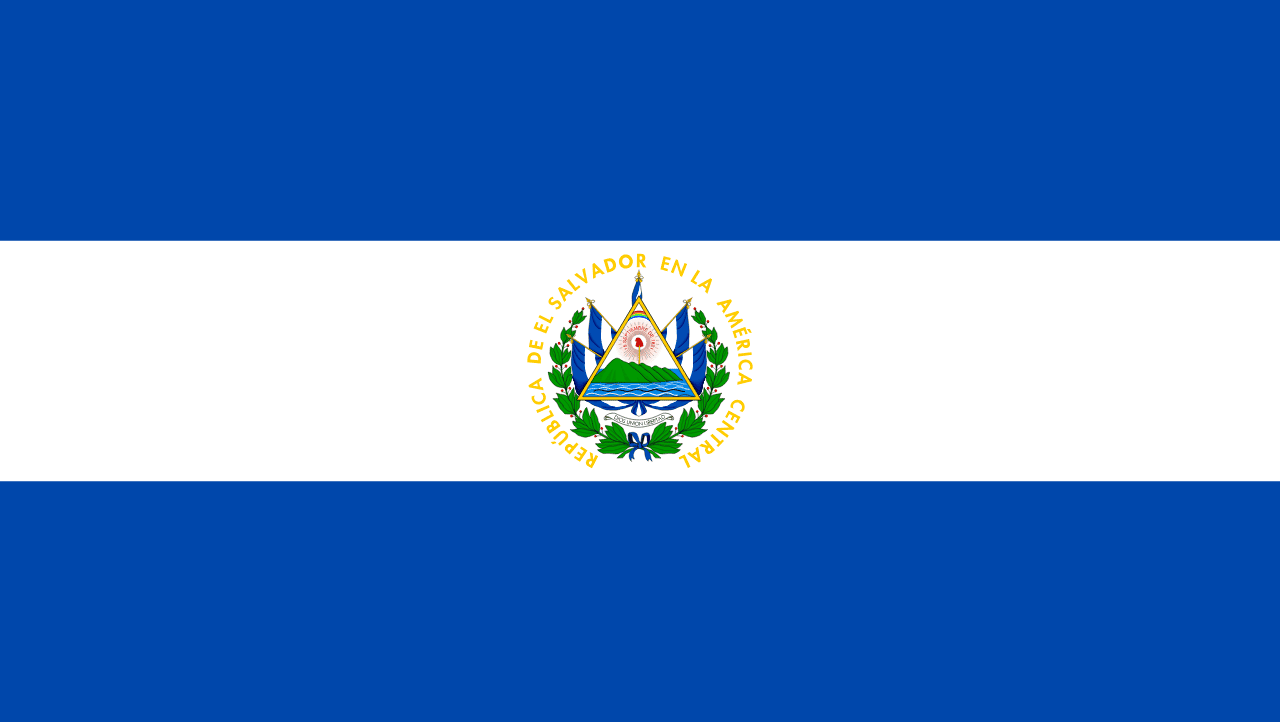
The flag of El Salvador is a profound symbol of national identity and the historic desire for Central American unity. It features a central coat of arms that depicts five volcanoes representing the original provinces of the region, topped by a cap of liberty and a rainbow of hope.
Colors & Symbols
The cobalt blue stripes represent the two great oceans that flank Central America as well as the clear blue sky above. The central white stripe signifies peace, honesty, and the purity of the nation’s ideals.
Adopted 1912
Proportions 189 to 335
Download
Country Statistics
Capital San Salvador
Population 6M
Region Americas
ISO-2 SV
Neighboring Flags
 GTM
GTM  HND
HND Flag History
The current design was inspired by the flag of the Federal Republic of Central America and was reintroduced to replace a stars and stripes design. This previous version, used for several decades in the late nineteenth and early twentieth centuries, featured a red canton and a varying number of stars representing the country’s departments.
Frequently Asked Questions
El Salvador's current flag was officially adopted on 1912.
El Salvador's flag has an official proportion of 189 to 335.
The five volcanoes represent the five original states of the Central American federation: El Salvador, Guatemala, Honduras, Nicaragua, and Costa Rica.
The motto Dios Union Libertad translates to God Union Liberty and serves as the fundamental guiding principle for the Salvadoran people.
El Salvador uses different versions for various purposes, including a grand flag with the coat of arms and a civil version that features the national motto in gold text.
The laurel wreath encircling the coat of arms is divided into fourteen segments to honor the fourteen administrative departments that make up the country.