
Flag of Eswatini
🇸🇿
Flag Meaning
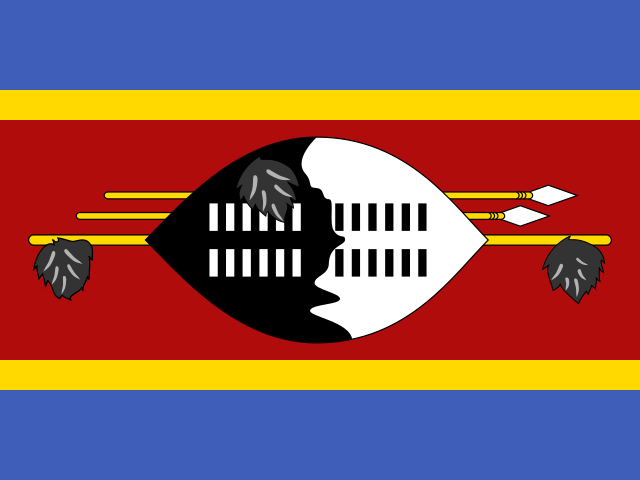
The flag of Eswatini serves as a profound symbol of national protection and cultural identity. At its center lies a traditional Nguni shield and two spears, which represent the country's readiness to defend its sovereignty against any adversaries. The staff behind the shield is adorned with decorative feather tassels known as injobo, which are traditionally associated with the monarchy and the authority of the King.
Colors & Symbols
The blue stripes at the top and bottom of the flag represent peace and stability within the nation. The thin yellow stripes signify the abundance of natural wealth and mineral resources found throughout the land. The central red stripe honors the past battles and the blood shed by ancestors in the struggle for independence.
Adopted 1968
Proportions 2:3
Download
Country Statistics
Capital Mbabane
Population 1.2M
Region Africa
ISO-2 SZ
Neighboring Flags


Flag History
The current design is deeply rooted in the nation's military heritage and was inspired by a banner given to the Swazi Pioneer Corps by King Sobhuza II during the 1940s. While Eswatini was a British protectorate, the Union Jack was often flown, but the local design was formally adopted upon gaining independence. The flag remained unchanged even after the country transitioned its official name from Swaziland to Eswatini.
Frequently Asked Questions
Eswatini's current flag was officially adopted on 1968.
Eswatini's flag has an official proportion of 2:3.
The black and white colors on the ox-hide shield symbolize the peaceful coexistence and unity between people of different races living together in the nation.
These tassels are crafted from the feathers of the widowbird and the lourie, which are birds of great cultural significance reserved for the use of the monarchy.
No, the national flag remained exactly the same when the name was changed from Swaziland to Eswatini to reflect the nation's original identity.
The two spears, known as assegais, are traditional African weapons that symbolize the strength of the people and their commitment to defending their homeland.