
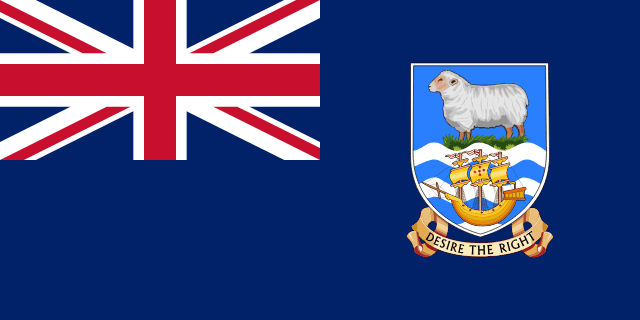
Flag of Falkland Islands
🇫🇰
Flag Meaning
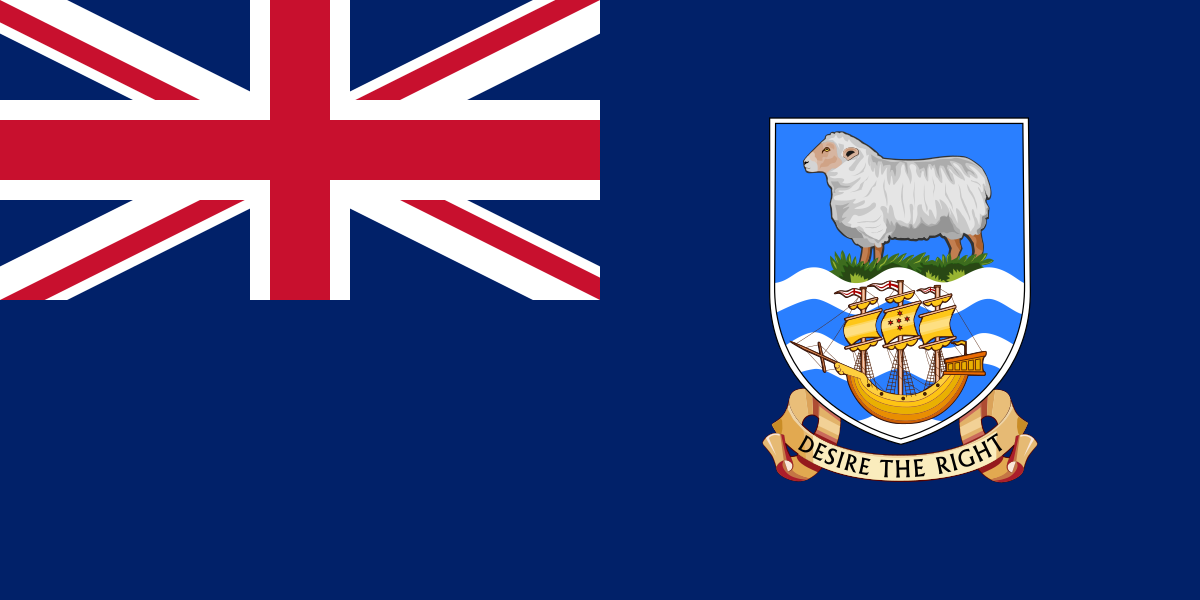
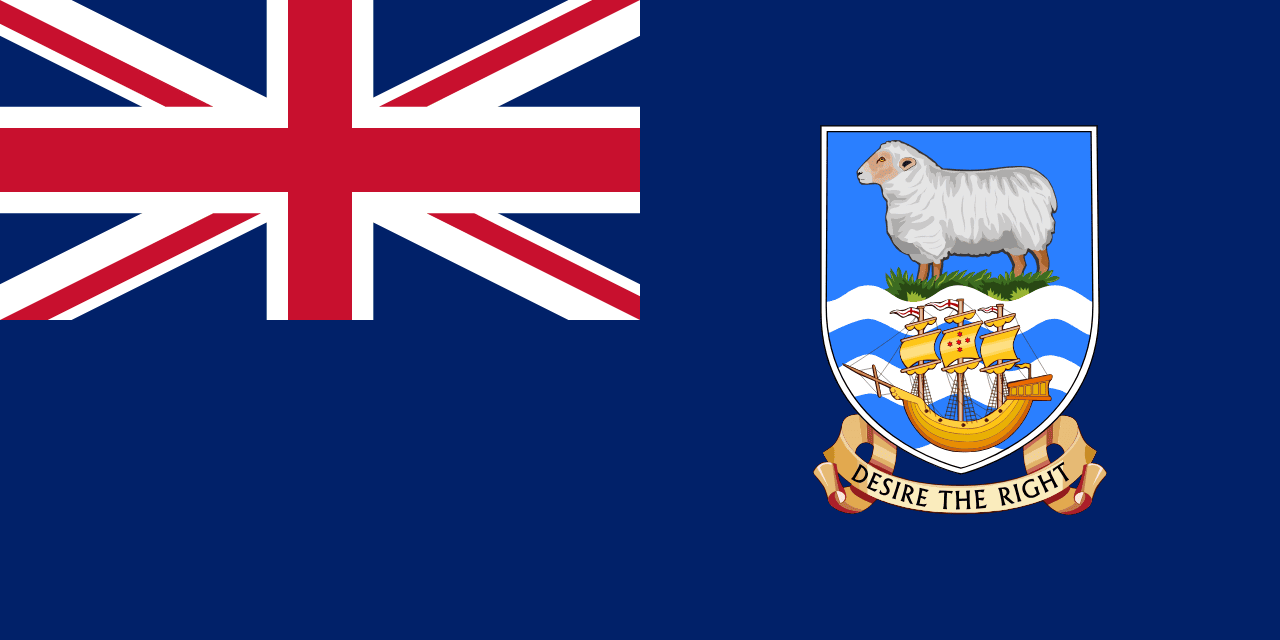
The flag of the Falkland Islands is a British Blue Ensign featuring the territory's unique coat of arms. The coat of arms includes a ram standing on native tussock grass to represent the historic sheep farming industry and the ship Desire to commemorate the islands' discovery. At the bottom, a scroll displays the motto Desire the Right, which references the ship name and the people's values.
Colors & Symbols
The dark blue field represents the surrounding South Atlantic Ocean and the islands' maritime heritage. The Union Jack in the canton signifies the islands' status as a British Overseas Territory through its traditional red, white, and blue colors. The coat of arms incorporates white, green, and gold to depict the local wildlife, flora, and historical vessels.
Adopted 1999
Proportions 1 : 2
Download
Country Statistics
Capital Stanley
Population 3.7K
Region Americas
ISO-2 FK
Flag History
The first official flag was introduced in 1876 and featured a colonial seal with a bullock and the ship HMS Hebe. This was replaced in 1925 by a design featuring a sea lion and the ship Desire before the current coat of arms was granted in 1948. In 1999, the design was updated by removing the white disc behind the coat of arms and enlarging the emblem for better visibility.
Frequently Asked Questions
Falkland Islands's current flag was officially adopted on 1999.
Falkland Islands's flag has an official proportion of 1 : 2.
The ram symbolizes the sheep farming industry, which was the primary economic activity on the islands for many generations.
The ship is the Desire, captained by John Davis, who is credited with the first sighting of the islands in 1592.
The Union Jack is included because the Falkland Islands are a British Overseas Territory, and the Blue Ensign reflects this political connection.
Yes, civilian vessels registered in the islands use a Red Ensign version of the flag, which features the same coat of arms on a red background.