
Flag of Faroe Islands
🇫🇴
Flag Meaning
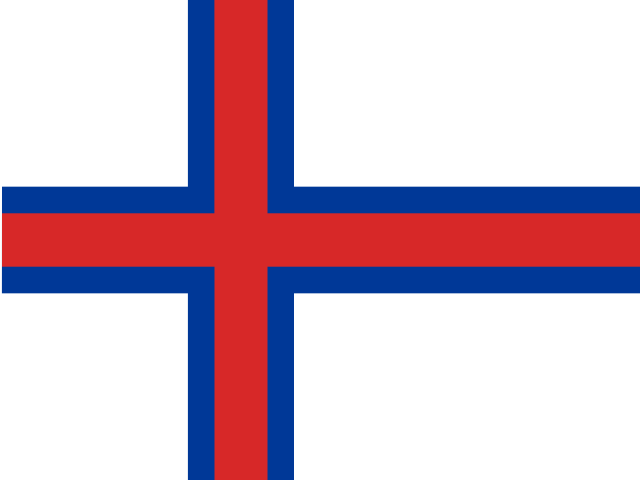
Known locally as Merkið, which translates to the banner or the mark, the flag features a Nordic cross that signifies the islands' deep Christian heritage and cultural connections to the Scandinavian region. It was created to provide a distinct national identity for the archipelago, moving away from the use of the Danish flag during the early twentieth century. Today, it serves as a powerful symbol of autonomy and pride for the Faroese people across the North Atlantic.
Colors & Symbols
The dominant white field represents the clear North Atlantic sky and the foam of the waves crashing against the rocky Faroese coastline. The red cross and its blue borders reflect traditional colors found in local Faroese dress and headdress, while also paying tribute to the flags of neighboring Norway and Iceland. Red specifically symbolizes the vitality and spiritual heart of the islanders, while blue represents the surrounding ocean.
Adopted 1948
Proportions 8:11
Download

Country Statistics
Capital Tórshavn
Population 54.9K
Region Europe
ISO-2 FO
Flag History
The flag was designed by Faroese students in Copenhagen in 1919 and was first raised later that year in the village of Fámjin. While it remained unofficial for many years, the British military recognized it as a maritime ensign in 1940 during the occupation of the islands in World War II to distinguish local vessels from those of occupied Denmark. It gained full legal status as the national flag through the Home Rule Act of 1948, which granted the territory significant self-governing powers.
Frequently Asked Questions
Faroe Islands's current flag was officially adopted on 1948.
Faroe Islands's flag has an official proportion of 8:11.
The name Merkið is the Faroese word for the banner or the mark, which is the traditional name given to the national flag.
April 25 commemorates the day in 1940 when the British government officially recognized the flag for use by Faroese vessels during the Second World War.
The very first flag, designed and hand-sewn by students in 1919, is preserved and on display inside the church in the village of Fámjin on the island of Suðuroy.
The flag has an official ratio of 8:11, and its internal construction follows a specific 6-1-2-1-12 horizontal pattern similar to the flag of Norway.