
Flag of French Guiana
🇬🇫
Flag Meaning
The flag of French Guiana is characterized by a diagonal division that creates two distinct triangular fields of green and yellow. A prominent five-pointed red star is situated in the center of the flag, serving as a powerful symbol of the territory's identity. This design is widely embraced by the local population for cultural, sporting, and regional representation, reflecting the unique character of the area.
Colors & Symbols
Green represents the vast tropical rainforests and the rich biodiversity that covers a majority of the territory. Yellow signifies the abundant mineral wealth found in the region, particularly the gold deposits that are central to its economic history. The red star serves as a symbol of social progress, the socialist roots of the design, and the blood shed by those who fought for the rights of the people.
Adopted 2010
Proportions 2:3
Download
Country Statistics
Capital Cayenne
Population 292.4K
Region Americas
ISO-2 GF
Neighboring Flags

Flag History
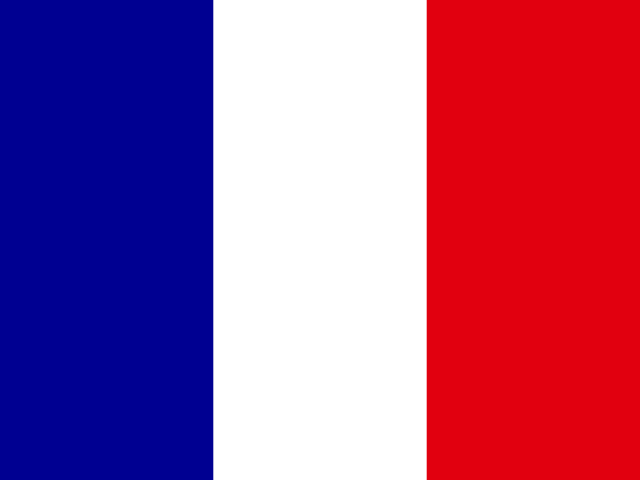
For much of its modern history, the French Tricolor has been the sole official flag of the territory due to its status as an overseas department of France. The green and yellow regional flag was originally designed in 1967 by a prominent local trade union and was officially adopted by the Departmental Council in early 2010. Although administrative changes in 2015 introduced a new logo for the territorial collectivity, the green and yellow banner remains the most popular and recognized symbol of regional pride.
Frequently Asked Questions
French Guiana's current flag was officially adopted on 2010.
French Guiana's flag has an official proportion of 2:3.
The official national flag of French Guiana is the French Tricolor of blue, white, and red, while the green and yellow flag is recognized as the regional and cultural banner.
The red star represents the historical struggle for social justice and the socialist ideology that influenced the original designers of the regional flag.
The flag was first created in 1967 by the Union of Guyanese Workers as a symbol of labor rights and local identity.
Yellow is used to represent the significant mineral resources of the territory, specifically the gold that has historically driven much of its economy.