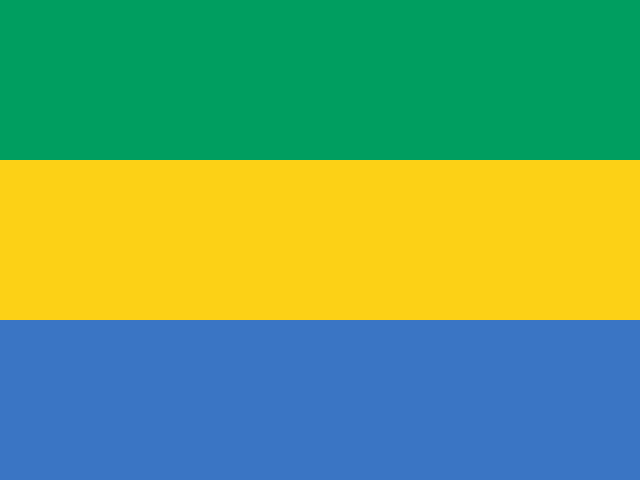
The flag of Gabon represents the nation's unique geographical position on the African continent and its abundant natural resources. It features three horizontal bands that symbolize the country's deep connection to its land, the sun, and the sea. This design reflects Gabon's status as an equatorial nation with significant environmental and maritime heritage.
Colors & Symbols
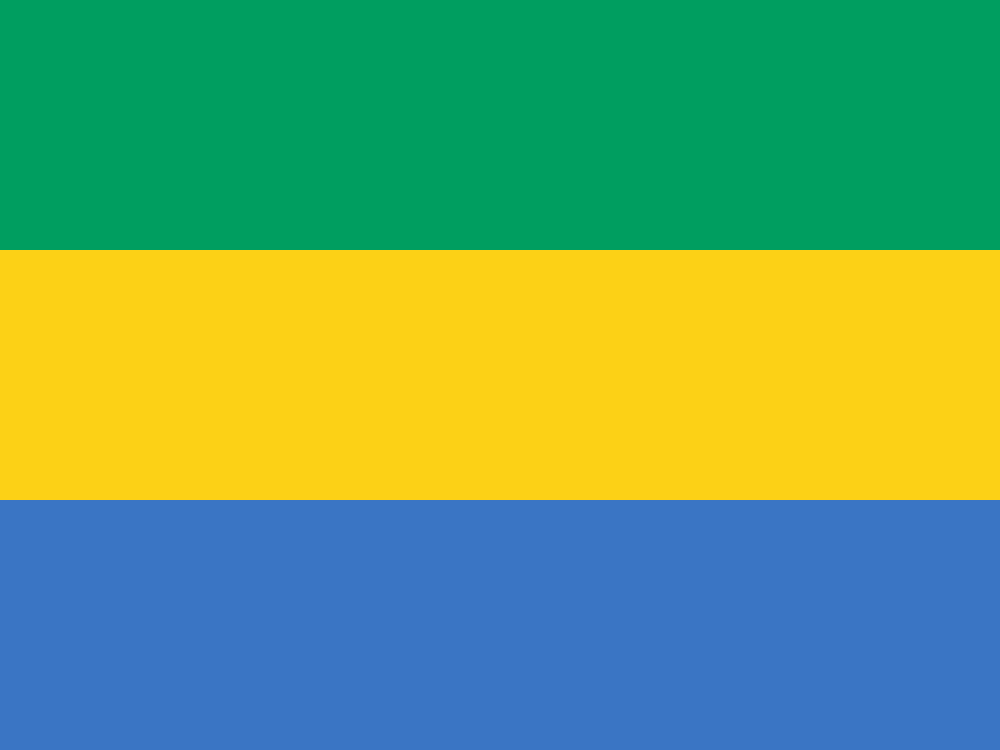
The green band at the top symbolizes the vast equatorial forests and the agriculture that drive the national economy. In the center, the yellow stripe represents the equator which bisects the country as well as the warmth of the tropical sun. The bottom blue band signifies the Atlantic Ocean and the extensive coastline that borders the western edge of the territory.
Before achieving full independence, the nation utilized a flag that featured the French Tricolour in the canton to denote its status as an autonomous republic within the French Community. In this earlier version used in 1959, the central yellow stripe was significantly narrower than the other two bands. Upon independence in 1960, the French symbol was removed and the stripes were adjusted to equal widths to create the current national emblem.
Frequently Asked Questions
Gabon's current flag was officially adopted on 1960.
Gabon's flag has an official proportion of 3:4.
While many former French colonies adopted vertical tricolors inspired by the French flag, Gabon chose horizontal bands to distinguish itself and emphasize its geographical features.
Gabon deliberately avoided the use of red to create a unique national identity that focuses on its natural environment and geographical location rather than political movements common in neighboring states.
The yellow stripe is a direct reference to the Equator, which passes directly through the heart of Gabon, separating the northern forests from the southern coastal waters.
Gabon is one of the few countries in the world to use a three to four aspect ratio, a distinctive choice that sets it apart from the more common two to three or one to two ratios.
🍪
Cookie Preferences
We use cookies to analyze traffic and improve your experience. No personal data is sold or shared with advertisers.
We use Google Analytics to understand how visitors use WorldStats. This helps us improve content and performance. Analytics cookies track page views and session data — no personally identifiable information is collected. You can change your preference at any time from the footer.

 CMR
CMR  COG
COG  GNQ
GNQ