
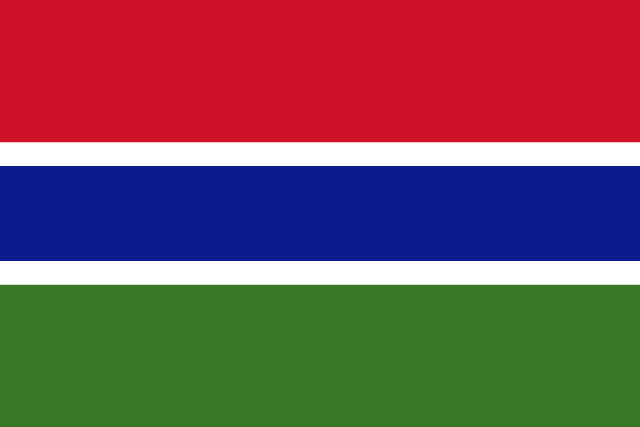
Flag of Gambia
🇬🇲
Flag Meaning
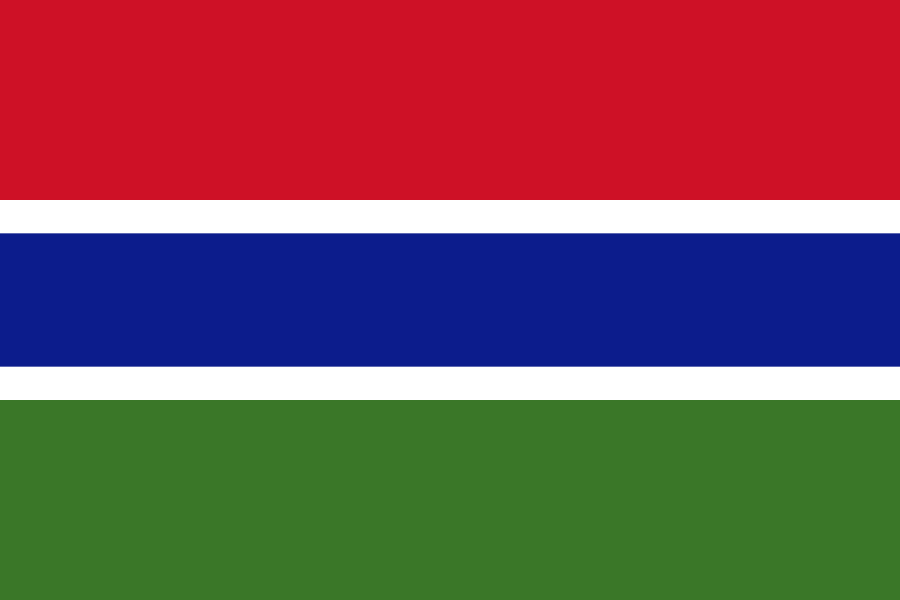
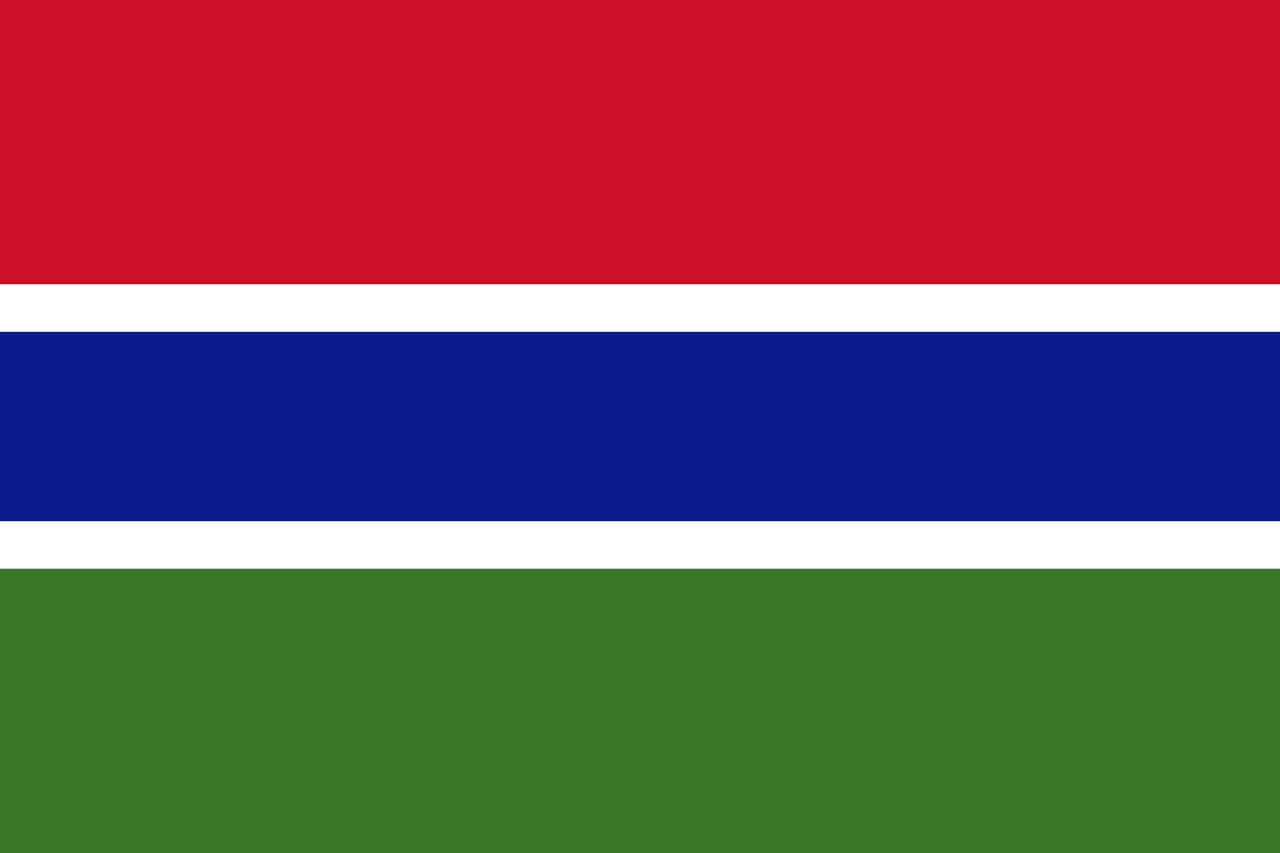
The flag of the Gambia symbolizes the nation connection to its natural geography and its commitment to national harmony. The central blue band represents the Gambia River, which is the vital life blood of the country and flows through its center. The design highlights the balance between the land, the water, and the peaceful co existence of the Gambian people.
Colors & Symbols
Red at the top represents the sun shining over the savannah, while green at the bottom symbolizes the forests and agricultural abundance. The blue stripe is separated from the other colors by thin white lines that stand for peace, purity, and unity.
Adopted 1965
Proportions 2 to 3
Download
Country Statistics
Capital Banjul
Population 2.4M
Region Africa
ISO-2 GM
Neighboring Flags
 SEN
SEN Flag History
The flag was adopted when the nation gained independence from British rule, replacing the colonial Blue Ensign. This earlier colonial flag featured a badge with an elephant, a palm tree, and the letter G. The modern design was created by Louis Thomasi and has remained the national symbol throughout the history of the country.
Frequently Asked Questions
Gambia's current flag was officially adopted on 1965.
Gambia's flag has an official proportion of 2 to 3.
The flag was designed by Louis Thomasi, a Gambian accountant who won a contest for the new national design.
The blue band represents the Gambia River, which is the most prominent geographic feature of the country.
The white lines denote peace and unity, acting as borders that harmonize the different geographic symbols.
No, the flag adopted in 1965 has remained the official national symbol of the Gambia without any changes.