

Flag of Jamaica
🇯🇲
Flag Meaning
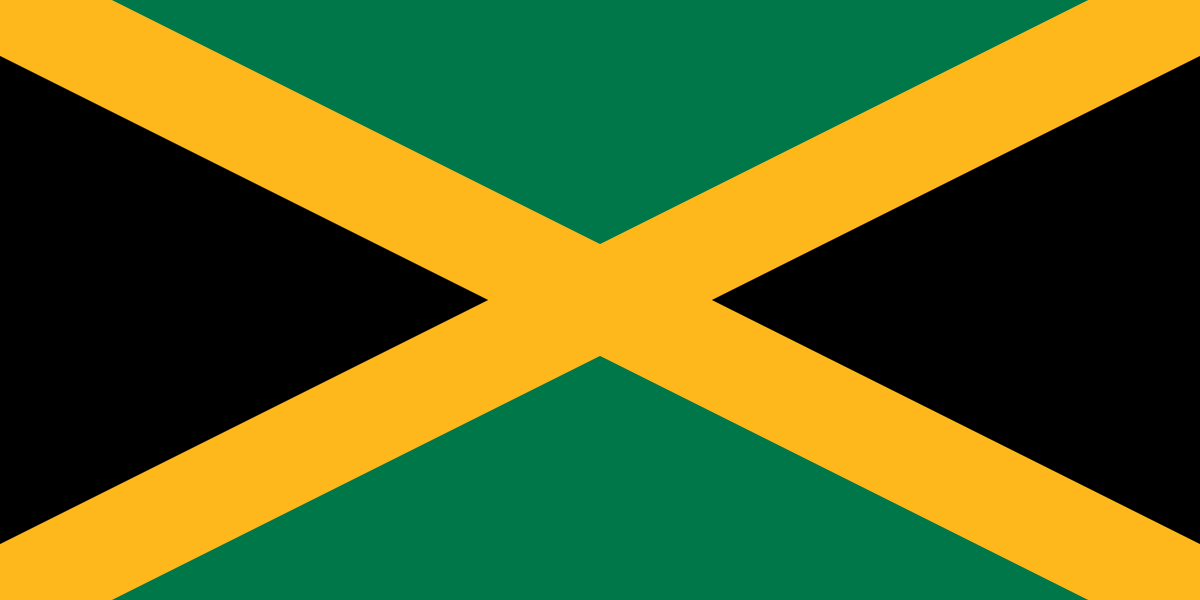
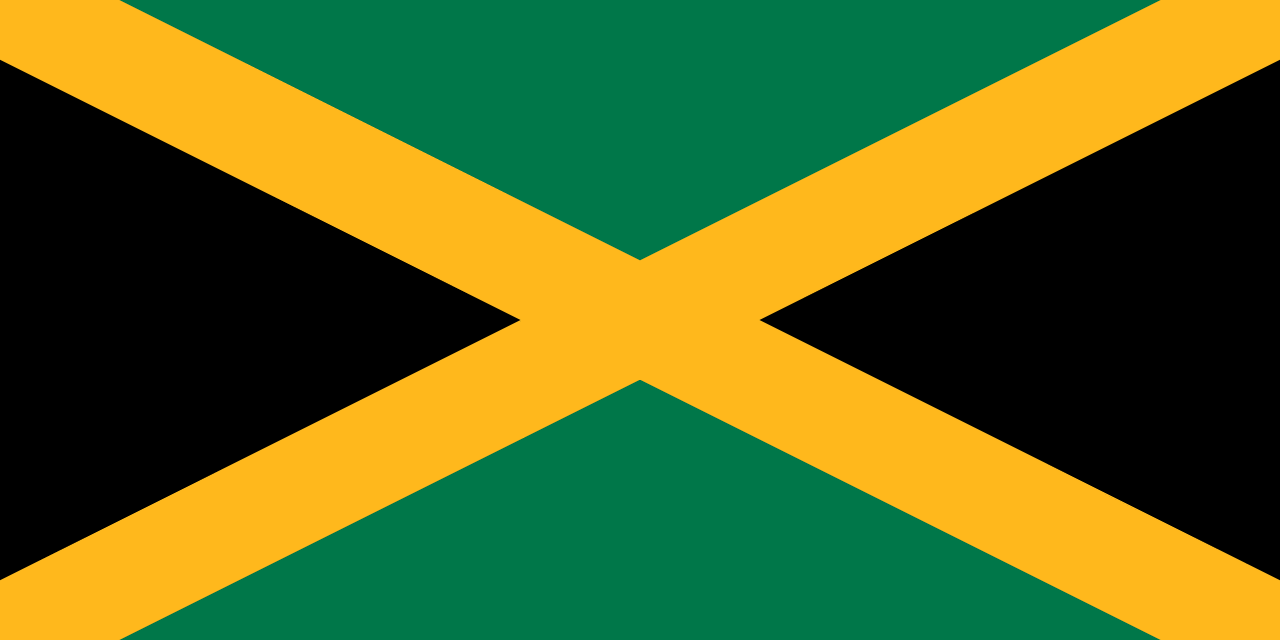
The flag of Jamaica features a gold saltire that divides the field into four triangles of green and black. This design symbolizes the national sentiment that while hardships may exist, the sun shines and the land is green. It serves as a powerful emblem of national identity and the resilient spirit of the island nation.
Colors & Symbols
The black triangles represent the strength and creativity of the people, while the gold saltire symbolizes the natural wealth and the beauty of the sun. Green triangles represent hope and the lush agricultural resources that define the country's landscape.
Adopted 1962
Proportions 1:2
Download
Country Statistics
Capital Kingston
Population 2.8M
Region Americas
ISO-2 JM
Flag History
Upon gaining independence from British rule, Jamaica held a national competition to design a new flag. The final saltire design was chosen by a bipartisan committee after an earlier proposal of horizontal stripes was rejected for its similarity to the flag of Tanganyika. This design choice established Jamaica as the only sovereign nation with a flag that does not feature the colors red, white, or blue.
Frequently Asked Questions
Jamaica's current flag was officially adopted on 1962.
Jamaica's flag has an official proportion of 1:2.
It is currently the only national flag of a sovereign country that does not contain the colors red, white, or blue.
The gold diagonal cross, known as a saltire, represents the natural wealth of the nation and the warmth of the tropical sun.
After a national contest failed to yield a winner, a bipartisan committee designed the flag, opting for a saltire to avoid confusion with the striped flag of Tanganyika.
The green color signifies the lush vegetation of the island, its agricultural heritage, and the hope for a prosperous future.