
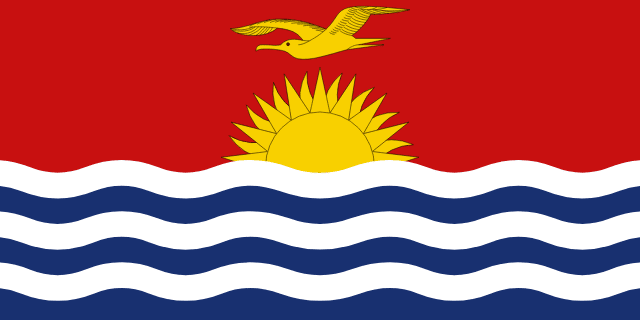
Flag of Kiribati
🇰🇮
Flag Meaning
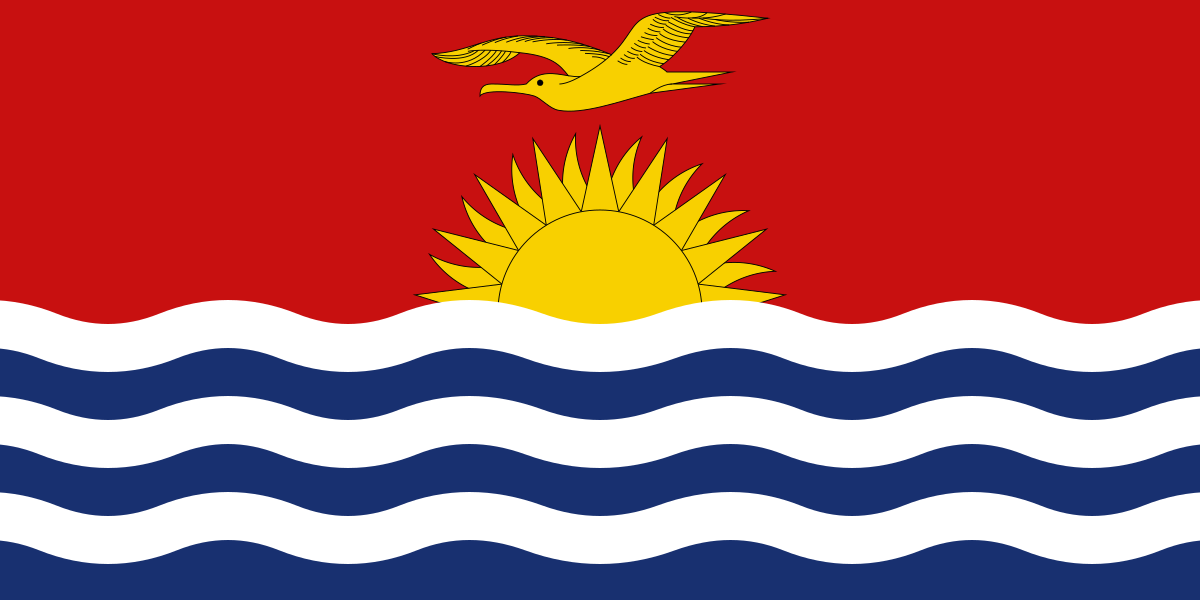
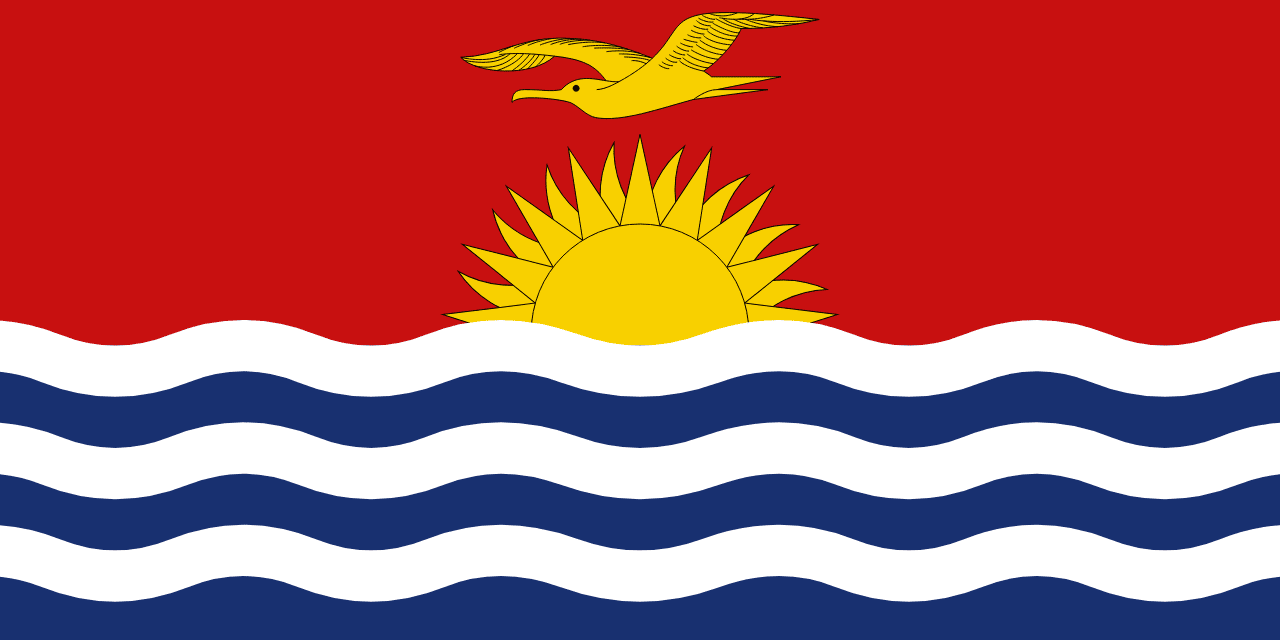
The flag of Kiribati is an armorial banner that features a golden frigate bird flying over a rising sun with seventeen rays. Below the sun, three sets of wavy white and blue lines represent the Pacific Ocean and the country's three main island groups. This unique design emphasizes the nation's connection to the sea and its geographical location near the equator.
Colors & Symbols
The upper red half of the flag symbolizes the sky and the courage of the people, while the gold used for the bird and sun signifies prosperity. The blue and white wavy bands at the bottom represent the vast ocean and the waves that surround the islands.
Adopted 1979
Proportions 1:2
Download
Country Statistics
Capital South Tarawa
Population 120.7K
Region Oceania
ISO-2 KI
Flag History
The flag is derived from the colonial coat of arms granted to the Gilbert and Ellice Islands in 1937, which was designed by Sir Arthur Grimble. Before independence, the design was part of a British Blue Ensign, but it was expanded to cover the entire flag area in 1979. Although the College of Arms initially proposed changes to the bird and sun, the local population successfully petitioned to keep the original artistic proportions.
Frequently Asked Questions
Kiribati's current flag was officially adopted on 1979.
Kiribati's flag has an official proportion of 1:2.
The frigate bird is a symbol of power, freedom, and the traditional dance patterns that are central to Kiribati culture.
The rays represent the sixteen islands in the Gilbert group and the single island of Banaba.
The three sets of wavy blue and white lines represent the three island groups of Kiribati: the Gilbert, Phoenix, and Line Islands.