
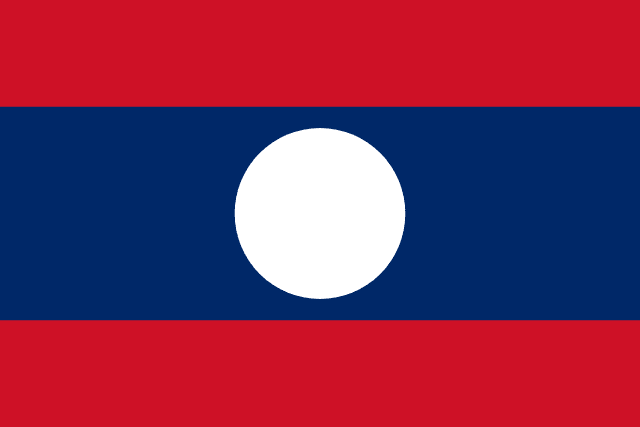
Flag of Laos
🇱🇦
Flag Meaning
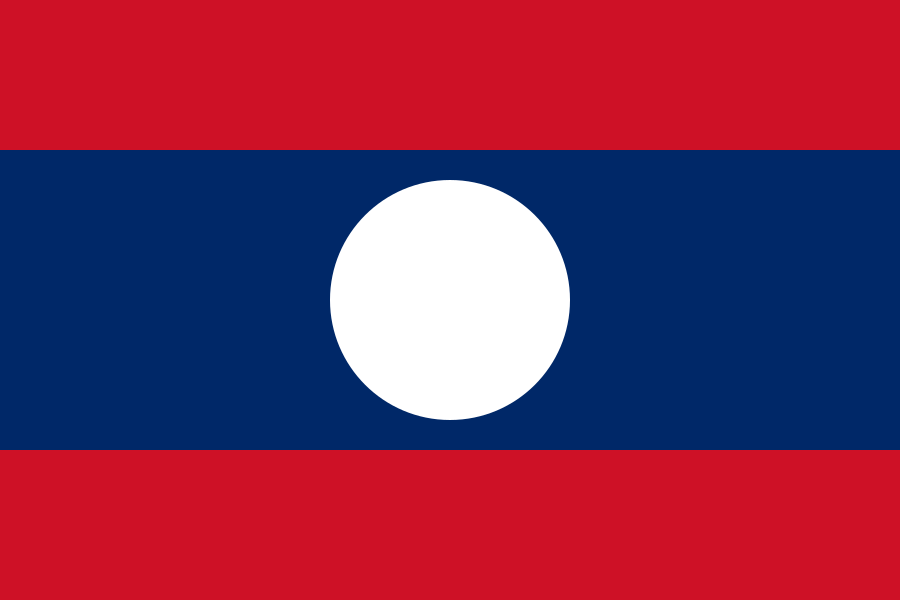
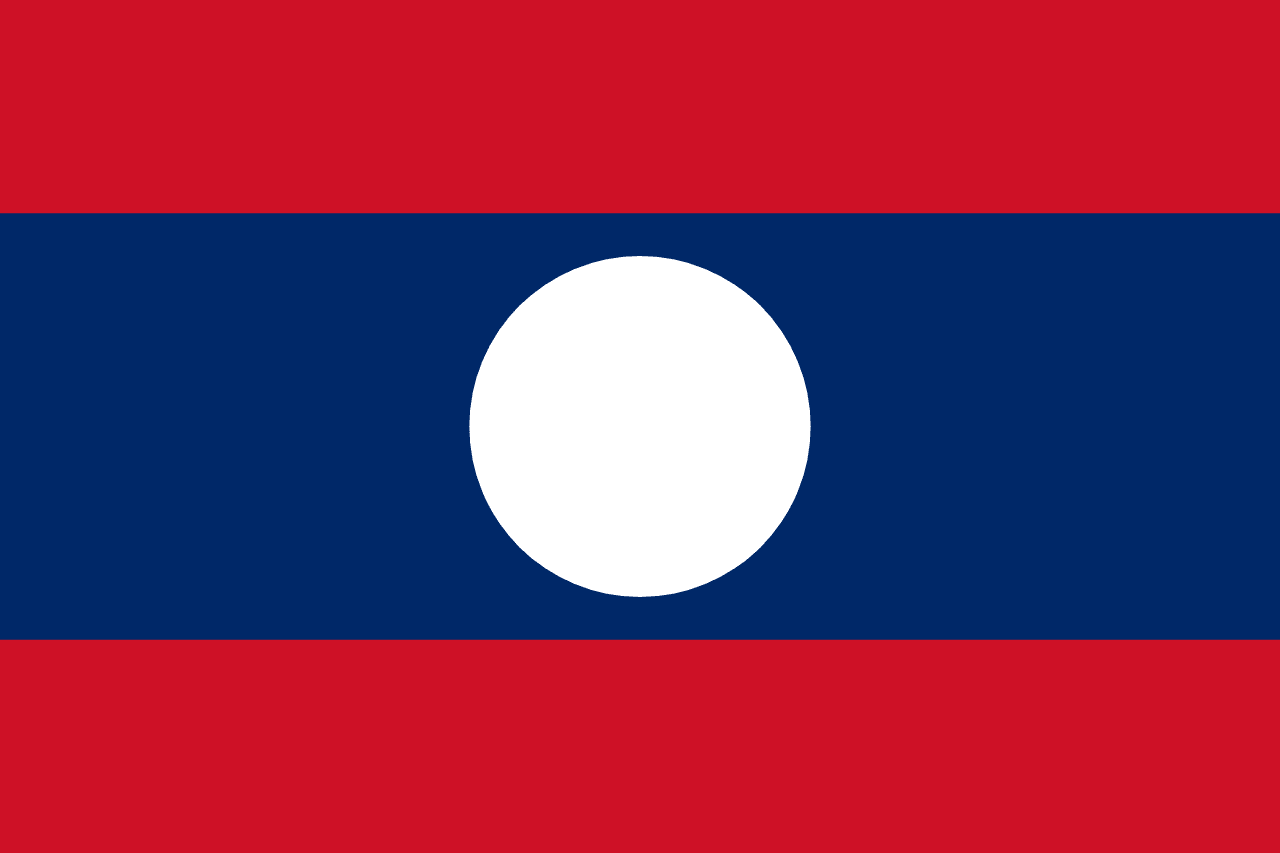
The national flag of Laos features a central white circle on a blue stripe, flanked by two red stripes. The white disk serves as a dual symbol, representing both the full moon shining over the Mekong River and the unity of the people under a single national identity. It also reflects the hope for a bright and prosperous future for the country.
Colors & Symbols
Red stripes on the top and bottom represent the blood shed by the Lao people during their historic struggle for independence and freedom. The central blue stripe symbolizes the Mekong River, which is the lifeblood of the nation, as well as general prosperity and wealth. The white color of the central circle signifies the purity of the nation and national reconciliation.
Adopted 1975
Proportions 2:3
Download
Country Statistics
Capital Vientiane
Population 7.6M
Region Asia
ISO-2 LA
Neighboring Flags
 MMR
MMR  KHM
KHM  CHN
CHN  THA
THA  VNM
VNM Flag History
Prior to the current design, the flag of the Kingdom of Laos featured a red field with a three-headed white elephant standing on a pedestal beneath a nine-layered parasol. This earlier design represented the ancient name of the country, the Land of a Million Elephants, and the three former kingdoms of Vientiane, Luang Prabang, and Champasak. The current flag was originally the banner of the Lao Issara independence movement in the 1940s before being officially reinstated when the republic was established.
Frequently Asked Questions
Laos's current flag was officially adopted on 1975.
Laos's flag has an official proportion of 2:3.
Laos is one of the few countries with a communist government that does not include a five-pointed star or a hammer and sickle on its national flag.
The flag was designed by Maha Sila Viravong, a prominent Lao historian and scholar, during the independence movement in 1945.
The three heads of the white elephant, known as Erawan, symbolized the three historical kingdoms of Luang Prabang, Vientiane, and Champasak.
The flag consists of three horizontal stripes where the middle blue stripe is twice the height of the top and bottom red stripes.