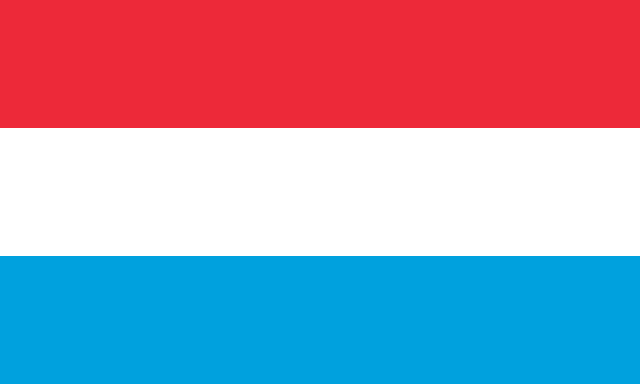
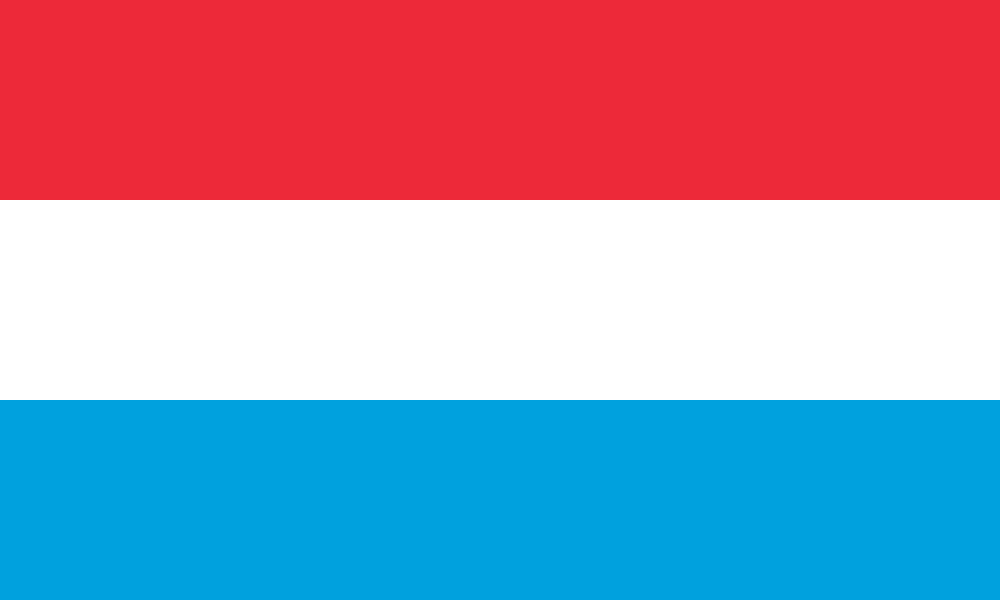
The flag of Luxembourg serves as a powerful symbol of national identity and sovereignty, drawing its inspiration from the historic coat of arms of the Grand Duchy. It represents the transition of the nation from a medieval territory to a modern independent state, reflecting the collective values of its citizens. The horizontal tricolor design is intended to project the country's commitment to European cooperation and peace.
Colors & Symbols
The flag is composed of three horizontal stripes in red, white, and light blue. Red represents the courage, vibrancy, and power of the people, while white signifies peace, harmony, and innocence. The light blue stripe, which is a signature feature of the nation's heraldry, symbolizes the sky and the perseverance of the population.
The colors are derived from the thirteenth century coat of arms belonging to Count Henry the Fifth, which famously depicted a red lion on a field of blue and white stripes. Although the tricolor design was used informally beginning in the mid nineteenth century during the Belgian Revolution, it was not formally codified into law until the late twentieth century. This legal definition was necessary to officially distinguish the flag from that of the Netherlands, which uses a significantly darker shade of blue.
Frequently Asked Questions
Luxembourg's current flag was officially adopted on 1972.
Luxembourg's flag has an official proportion of 3:5 or 1:2.
While both flags use a red, white, and blue tricolor, Luxembourg uses a much lighter shade of sky blue and maintains different official proportions, often appearing more elongated.
The Roude Leiw, or Red Lion flag, features a red lion on a background of white and blue stripes and serves as the country's civil ensign for maritime and aviation purposes.
The specific light blue shade was chosen to honor the ancestral colors of the House of Luxembourg and to provide a clear visual distinction from other similar European tricolors.
The tricolor is the primary national flag used for international representation, but the Red Lion flag is also an official symbol used within the territory and for specific civil functions.
🍪
Cookie Preferences
We use cookies to analyze traffic and improve your experience. No personal data is sold or shared with advertisers.
We use Google Analytics to understand how visitors use WorldStats. This helps us improve content and performance. Analytics cookies track page views and session data — no personally identifiable information is collected. You can change your preference at any time from the footer.


 BEL
BEL  FRA
FRA  DEU
DEU