
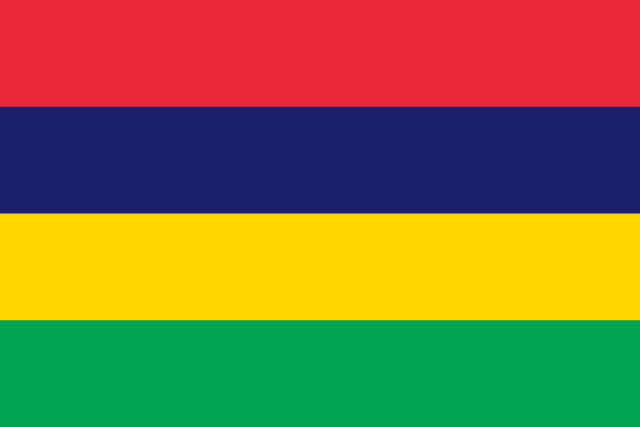
Flag of Mauritius
🇲🇺
Flag Meaning
The national flag of Mauritius, widely known as the Four Bands or Les Quatre Bandes, represents the sovereign spirit and unity of its people. It serves as a vibrant symbol of the island nation's transition from colonial rule to a self-determined and independent state. The design reflects the shared identity of a multicultural population and their collective hope for a prosperous future.
Colors & Symbols
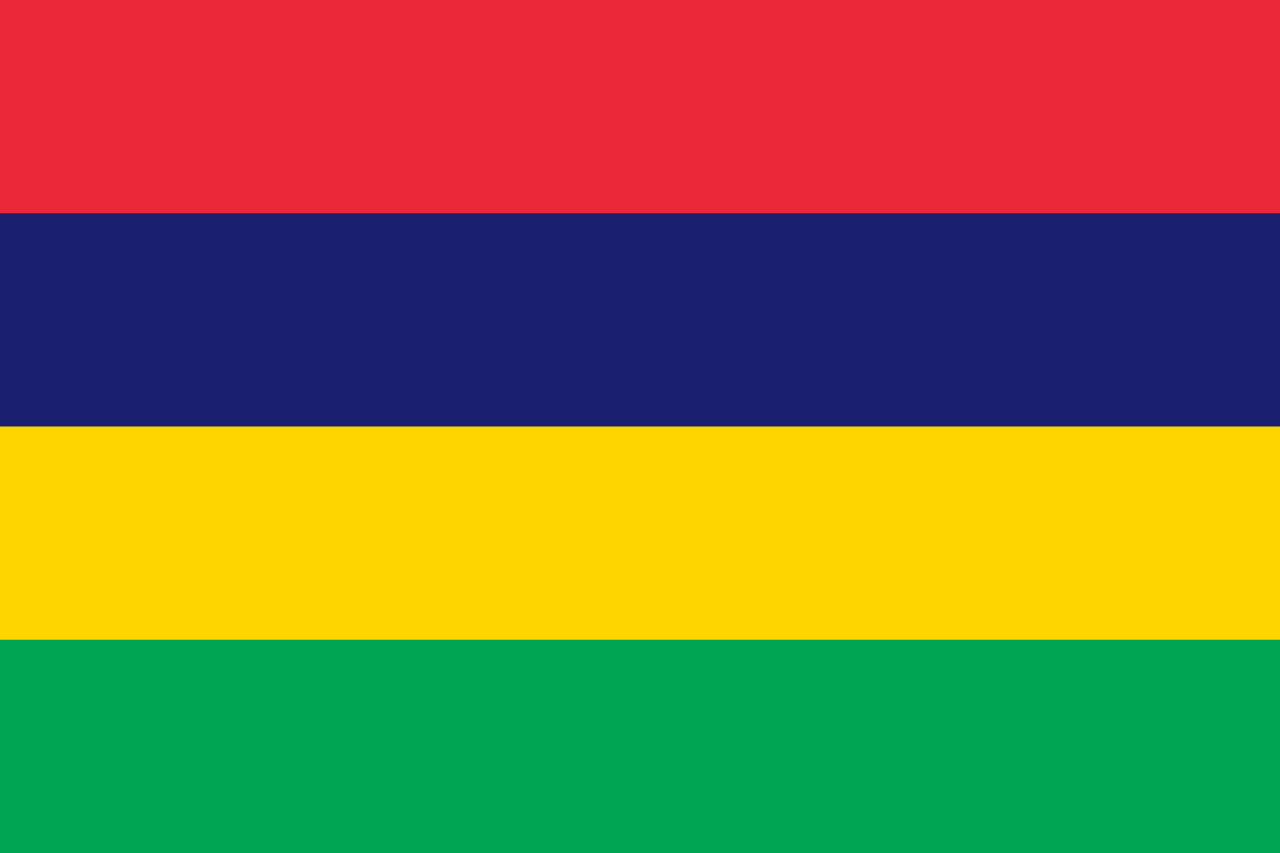
Red represents the struggle for freedom and the blood shed during the historical quest for independence. Blue signifies the vast Indian Ocean that surrounds the island, while yellow denotes the new light of liberty and the tropical sun. Green symbolizes the lush vegetation and the agricultural abundance of the nation which remains vibrant throughout the year.
Adopted 1968
Proportions 2:3
Download

Country Statistics
Capital Port Louis
Population 1.2M
Region Africa
ISO-2 MU
Flag History
The current flag was designed by a primary school teacher named Gurudutt Moher and was officially adopted on March 12, 1968, when the country gained independence from the United Kingdom. Before this period, Mauritius utilized various versions of the British Blue Ensign featuring different colonial badges, including designs with sugar cane and ships. Earlier historical periods saw the use of the Dutch tricolor and the French vertical tricolor during their respective colonial administrations.
Frequently Asked Questions
Mauritius's current flag was officially adopted on 1968.
Mauritius's flag has an official proportion of 2:3.
The flag is commonly referred to as Les Quatre Bandes, which translates to The Four Bands in French, highlighting its four distinct colored stripes.
The flag was designed by Gurudutt Moher, a local teacher who was posthumously honored for his lasting contribution to the national symbols of the country.
No, the national flag consists solely of four horizontal bands of equal width and does not contain any emblems or coats of arms.
The blue band is symbolic of the Indian Ocean, representing the maritime environment and the island's isolated yet significant geographic location.