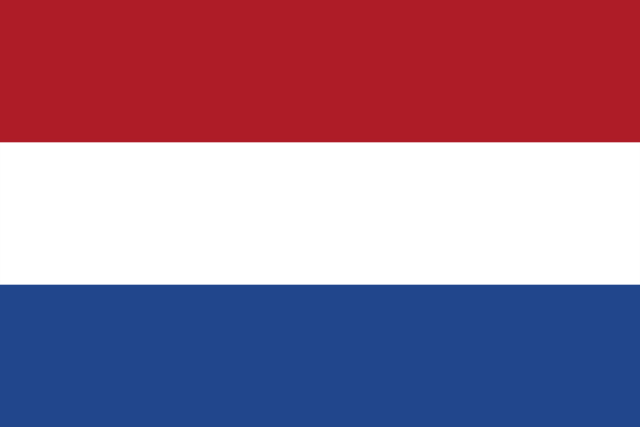
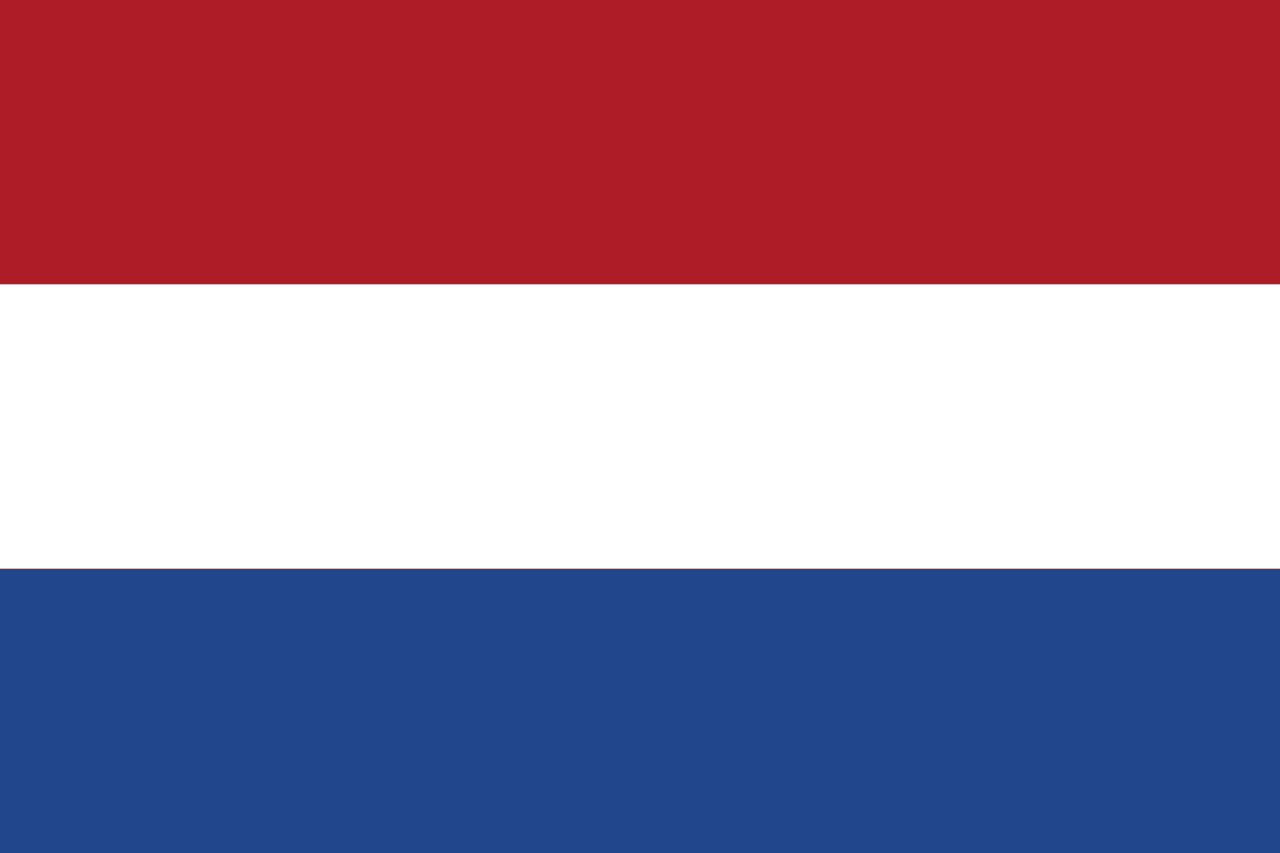
The flag of the Netherlands serves as a profound symbol of national identity, independence, and the historical struggle for freedom. As the oldest tricolor flag in continuous use, it represents the country's evolution from a collection of provinces into a unified sovereign state. It embodies the enduring principles of democracy and the maritime heritage that defined the Dutch Golden Age.
Colors & Symbols
The bright vermilion red band signifies bravery, strength, and the historical valor of the people. The central white stripe represents peace, honesty, and the purity of the national spirit. The cobalt blue stripe at the bottom symbolizes vigilance, truth, and loyalty to the state and its ideals.
The design evolved from the sixteenth century Prince's Flag, which originally featured orange, white, and blue stripes in honor of William of Orange. By the mid seventeenth century, the orange stripe was gradually replaced by red, a change attributed to the superior visibility of red dye at sea and shifting political sentiments. Queen Wilhelmina eventually ended centuries of variation by issuing a royal decree to formalize the red, white, and blue version as the official national standard.
Frequently Asked Questions
Netherlands's current flag was officially adopted on 1937.
Netherlands's flag has an official proportion of 2:3.
While the original version used orange to honor the House of Orange, the color was replaced with red in the seventeenth century because red dye was more stable and visible at sea.
An orange pennant is traditionally flown above the national flag during birthdays of the Royal Family and other significant royal celebrations to show modern ties to the House of Orange.
Although they look similar, the Dutch flag uses a darker cobalt blue and has a height to length ratio of 2:3, whereas the Luxembourg flag uses a lighter sky blue and a ratio of 3:5.
Yes, it is widely considered the oldest tricolor flag still in continuous use, and its design served as a primary inspiration for many other national flags, including those of France and Russia.
🍪
Cookie Preferences
We use cookies to analyze traffic and improve your experience. No personal data is sold or shared with advertisers.
We use Google Analytics to understand how visitors use WorldStats. This helps us improve content and performance. Analytics cookies track page views and session data — no personally identifiable information is collected. You can change your preference at any time from the footer.

 BEL
BEL  DEU
DEU