
Flag of Norfolk Island
🇳🇫
Flag Meaning
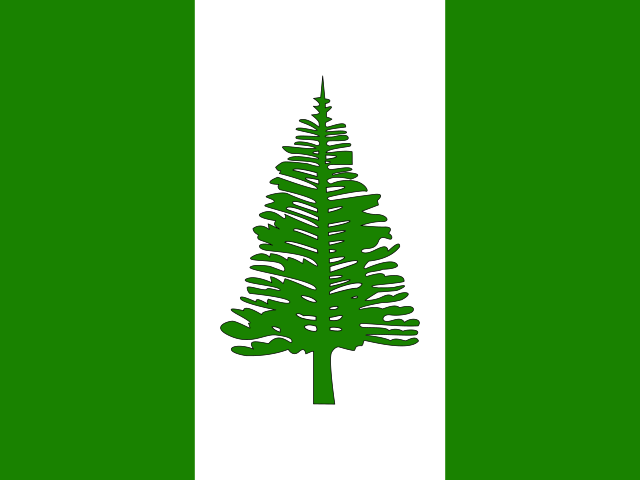
The flag of Norfolk Island features a central evergreen tree known as the Norfolk Island Pine, which serves as the primary symbol of the territory's unique botanical heritage and resilient identity. This central emblem is positioned within a vertical triband design, reflecting the island's isolation and its deep-rooted connection to the surrounding natural world. Overall, the design emphasizes the importance of environmental preservation and the distinct character of the island community.
Colors & Symbols
The flag utilizes a simple yet evocative palette consisting of green and white. The green stripes represent the lush, fertile land and the abundant vegetation found across the island, while the white central stripe signifies peace and the harmony existing between the inhabitants and their environment.
Adopted 1980
Proportions 1:2
Download

Country Statistics
Capital Kingston
Population 2.2K
Region Oceania
ISO-2 NF
Flag History
Before the official adoption of its current design, Norfolk Island was represented by the national flags of the United Kingdom and Australia. The present flag was approved by the local council in 1979 and officially introduced through the Norfolk Island Flag and Public Seal Act on January 17, 1980. Its creation marked a significant step in establishing a unique visual identity for the territory following the granting of limited self-government.
Frequently Asked Questions
Norfolk Island's current flag was officially adopted on 1980.
Norfolk Island's flag has an official proportion of 1:2.
The tree shown in the center of the flag is the Norfolk Island Pine, which is endemic to the island and serves as its official national symbol.
The central white stripe is slightly wider than the outer green stripes, often following a ratio of 7:9:7, to provide a prominent space for the detailed depiction of the pine tree.
The flag is frequently compared to the flag of Canada due to its use of a central botanical symbol, and it also shares a similar green and white vertical triband layout with the flag of Nigeria.