
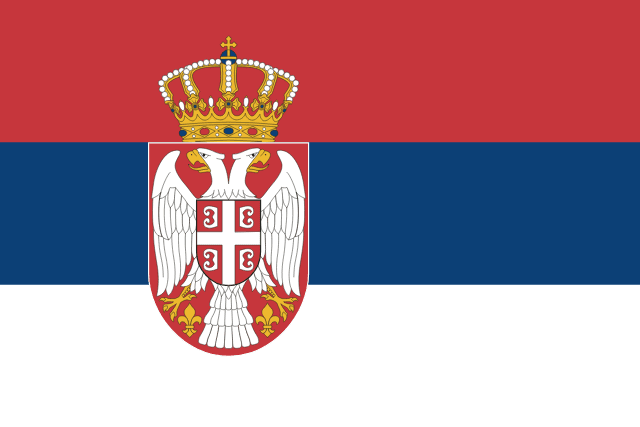
Flag of Serbia
🇷🇸
Flag Meaning
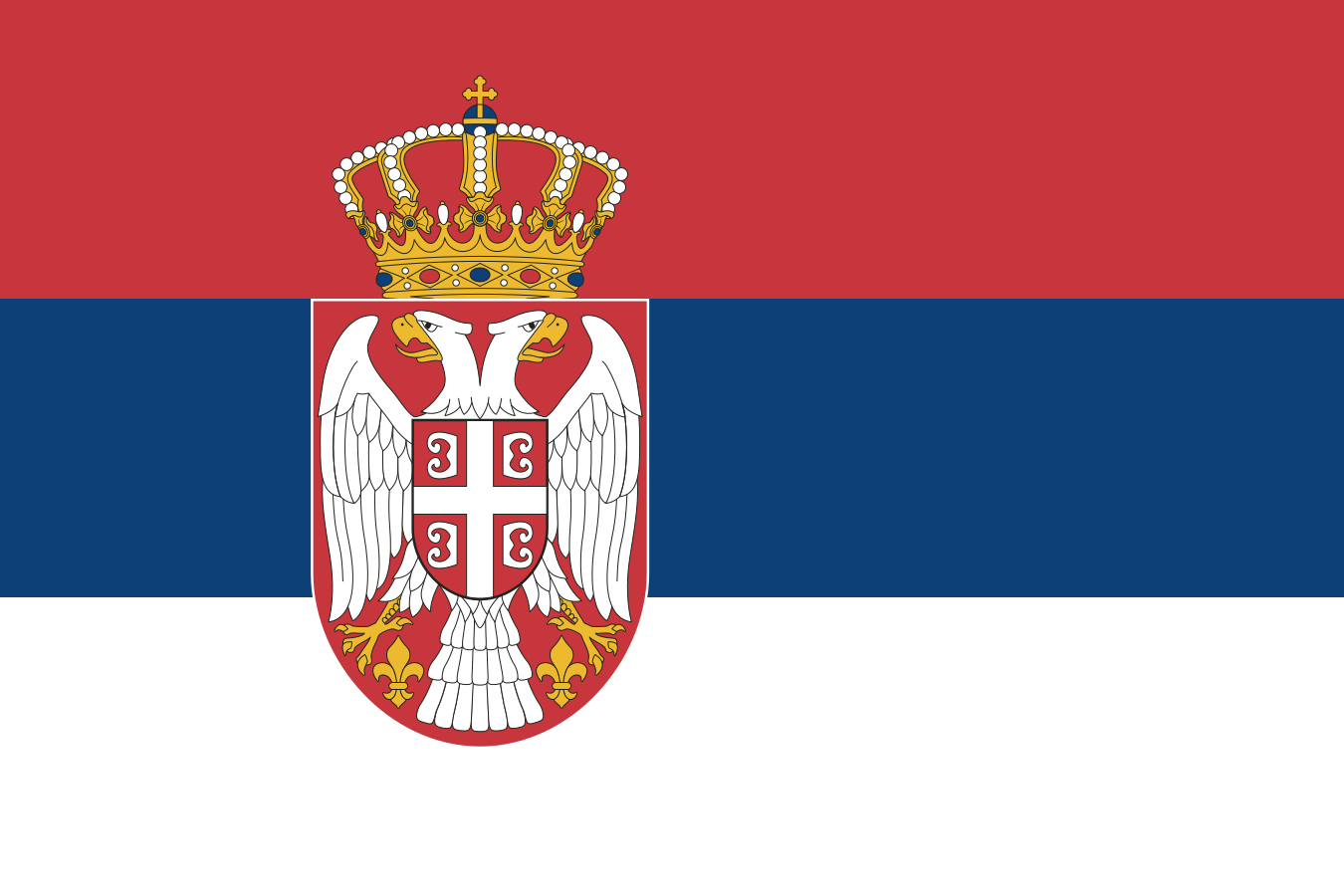
The flag of Serbia is a horizontal tricolor of red, blue, and white, featuring the national coat of arms shifted toward the hoist. It represents the sovereignty and historical continuity of the Serbian people, blending centuries of Slavic heritage with modern national identity. The coat of arms includes a double-headed eagle and a shield with four firesteels, symbolizing the union of the earthly and heavenly kingdoms.
Colors & Symbols
The red stripe signifies the blood shed during the nation's long struggle for independence and freedom. Blue represents the vast, clear sky and the hope for a prosperous future, while white symbolizes purity, peace, and the bright light of a new dawn. These Pan-Slavic colors were officially adopted in the nineteenth century to reflect solidarity among Slavic nations.
Adopted 2010
Proportions 2:3
Download

Country Statistics
Capital Belgrade
Population 6.6M
Region Europe
ISO-2 RS
Neighboring Flags
 BIH
BIH  BGR
BGR  HRV
HRV  HUN
HUN  UNK
UNK  MKD
MKD  MNE
MNE  ROU
ROU Flag History
The earliest recorded Serbian flag dates back to the thirteenth century and consisted of red and blue horizontal stripes. During the 1835 Sretenje Constitution, the modern red-blue-white tricolor was established, reportedly inspired by the Russian flag with the colors reversed. In the twentieth century, the flag featured a red star during the socialist Yugoslav era before reverting to its traditional design in the early 1990s.
Frequently Asked Questions
Serbia's current flag was officially adopted on 2010.
Serbia's flag has an official proportion of 2:3.
The four Cyrillic C shapes are firesteels that form the Serbian cross and are popularly interpreted as the acronym for Only Unity Saves the Serbs.
No, while both use the same Pan-Slavic colors, the order of the stripes is different as Serbia uses red, blue, and white from top to bottom.
The double-headed eagle is a historic symbol inherited from the Byzantine Empire, representing the dual nature of the state's spiritual and secular authority.
The communist red star was officially removed in 1992 following a recommendation by the Serbian parliament after the transition from the Yugoslav era.