
Flag of Sri Lanka
🇱🇰
Flag Meaning
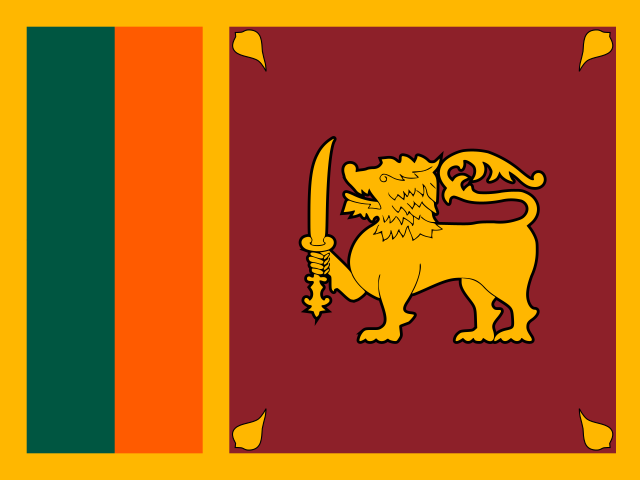
The flag of Sri Lanka , also known as the Lion Flag , represents the bravery of the nation and its commitment to religious and ethnic harmony . The central golden lion symbolizes the Sinhalese people , while the four bo leaves in the corners represent the fundamental Buddhist virtues of kindness , compassion , joy , and equanimity . This design serves as a powerful symbol of national sovereignty and the rich cultural history of the island .
Colors & Symbols
The maroon field represents the majority Sinhalese population , while the orange and green stripes represent the Tamil and Muslim minorities respectively . A golden yellow border encircles the entire design to signify the unity of all citizens and the protection of the diverse heritage of the country .
Adopted 1972
Proportions 1 : 2
Download

Country Statistics
Capital Sri Jayawardenepura Kotte
Population 22M
Region Asia
ISO-2 LK
Flag History
The current design is an evolution of the ancient Lion Flag used by the Kandyan kings until the British took control of the island in 1815 . Upon gaining independence in 1948 , the nation revived the lion standard but added vertical stripes in 1951 to acknowledge minority groups . The four corner icons were changed from traditional spires to bo leaves in 1972 to further emphasize the Buddhist roots of the nation .
Frequently Asked Questions
Sri Lanka's current flag was officially adopted on 1972.
Sri Lanka's flag has an official proportion of 1 : 2.
The sword held by the golden lion represents the sovereignty of the nation and the bravery of the people in maintaining independence .
The leaves come from the sacred bo tree and represent the four Buddhist virtues of loving kindness , compassion , sympathetic joy , and equanimity .
These stripes were added to the flag in 1951 to ensure the Tamil and Muslim communities were represented alongside the majority population .
The yellow border symbolizes the other minority groups in the country and represents the overarching unity and protection of all citizens .