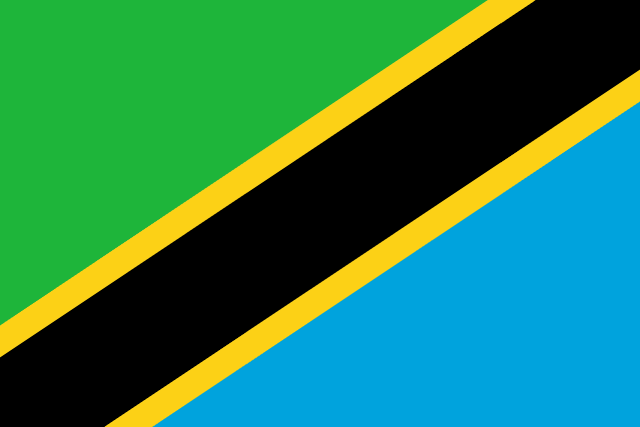
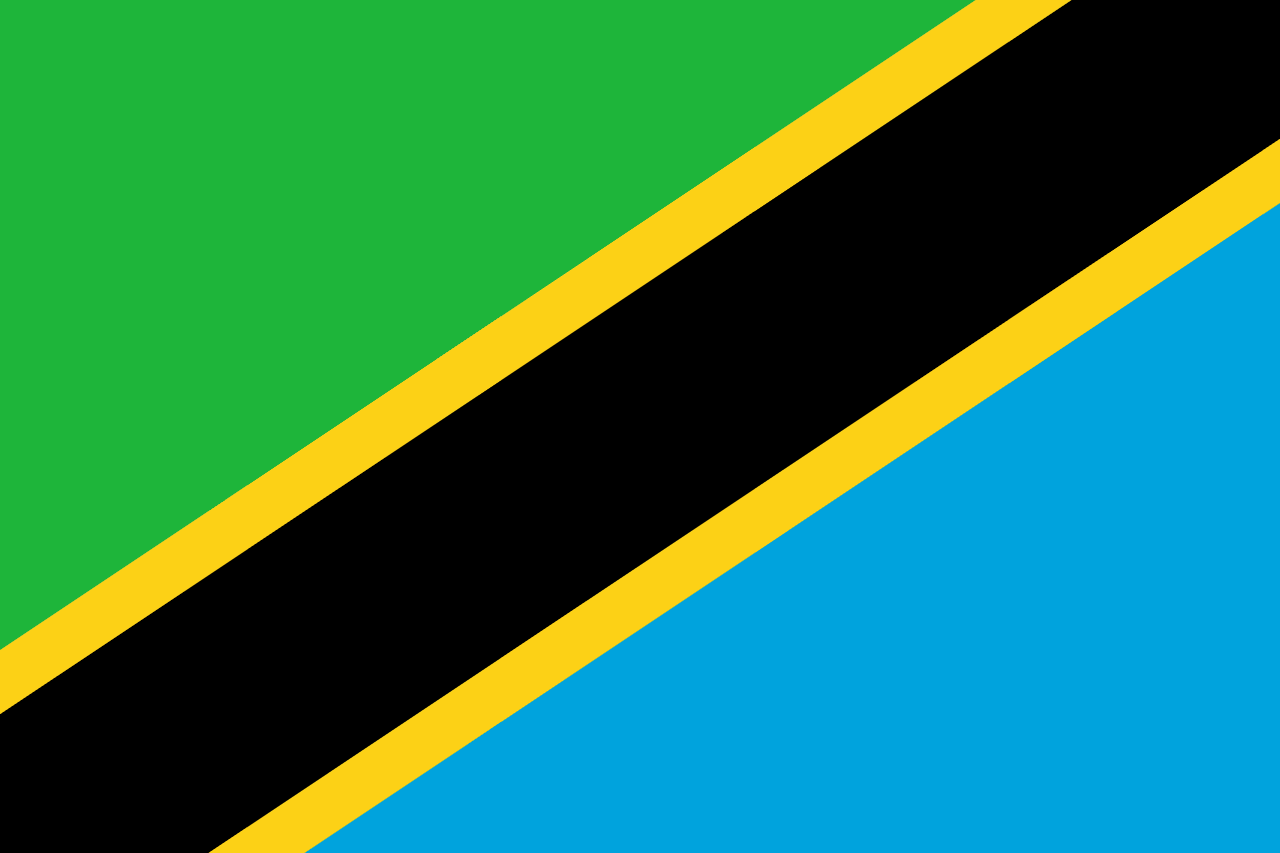
The flag of Tanzania serves as a powerful symbol of the unified nation formed by the merger of Tanganyika and Zanzibar. Its diagonal design represents the equality and shared destiny of the two former territories coming together as one sovereign state. The arrangement of elements conveys a message of national unity and the collective identity of the Tanzanian people.
Colors & Symbols
The green section represents the natural beauty and rich agricultural resources of the land, while the blue portion symbolizes the Indian Ocean and the nation's many lakes and rivers. A central black band represents the native Swahili people of the country, and the thin yellow or gold stripes signify the abundant mineral wealth found beneath the soil.
Following the merger of Tanganyika and Zanzibar in 1964, a new national symbol was required to represent the unified republic. The design cleverly combined the green and black colors of the Tanganyika African National Union flag with the blue and black hues from the Afro-Shirazi Party flag used in Zanzibar. By placing these colors in a diagonal format, the creators ensured the new flag was distinct from the horizontal stripes used by its predecessors.
Frequently Asked Questions
Tanzania's current flag was officially adopted on 1964.
Tanzania's flag has an official proportion of 2:3.
The diagonal layout was chosen to differentiate the new national symbol from the horizontal stripe patterns of the two territories that merged to form the country, symbolizing a fresh and equal start for the union.
The current flag is a hybrid of the horizontal green, black, and yellow flag of Tanganyika and the blue, black, and green tricolor flag of Zanzibar.
While the national flag of Tanzania is the primary sovereign symbol, Zanzibar adopted a regional flag in 2005 that features its traditional tricolor stripes with the Tanzanian national flag located in the upper corner.
Yes, the thin stripes bordering the black band are frequently referred to as both yellow and gold, representing the various mineral deposits and resources of the nation.
🍪
Cookie Preferences
We use cookies to analyze traffic and improve your experience. No personal data is sold or shared with advertisers.
We use Google Analytics to understand how visitors use WorldStats. This helps us improve content and performance. Analytics cookies track page views and session data — no personally identifiable information is collected. You can change your preference at any time from the footer.


 BDI
BDI  COD
COD  KEN
KEN  MWI
MWI  MOZ
MOZ  RWA
RWA  UGA
UGA  ZMB
ZMB