
Flag of Timor-Leste
🇹🇱
Flag Meaning
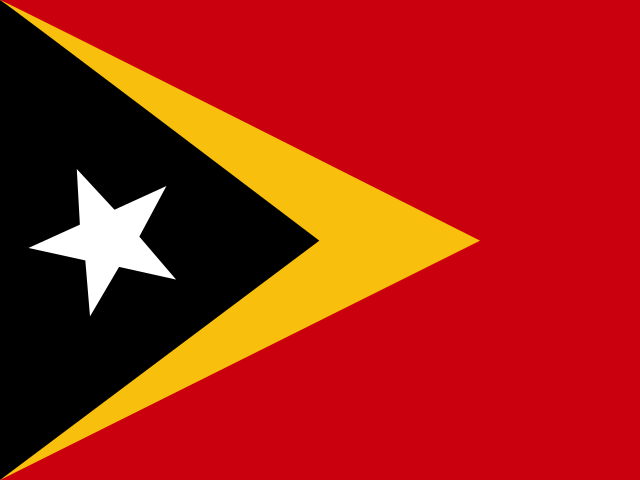
The flag of Timor-Leste features a red field with two overlapping triangles and a white star, symbolizing the nation's journey toward sovereignty and peace. The triangles represent the historical layers of the country, while the star acts as a guiding light for the future. Collectively, the design honors the resilience of the people and their commitment to a peaceful, independent state.
Colors & Symbols
Red signifies the struggle for national liberation, while yellow represents the vestiges of colonialism in the nation's history. Black symbolizes the obscurantism that must be overcome, and the white star represents peace and the light that guides the people.
Adopted 2002
Proportions 1:2
Download
Country Statistics
Capital Dili
Population 1.4M
Region Asia
ISO-2 TL
Neighboring Flags

Flag History
The current design was originally adopted in 1975 when the country first declared independence from Portugal, but it was suppressed during the subsequent Indonesian occupation. It was officially restored in 2002 upon the nation's full independence, serving as a powerful link to the original independence movement. The flag was designed by resistance fighter Natalino Leitao just before the 1975 proclamation.
Frequently Asked Questions
Timor-Leste's current flag was officially adopted on 2002.
Timor-Leste's flag has an official proportion of 1:2.
The white star represents peace and serves as the light that guides the nation toward a better future.
It was first used in 1975 during a brief period of independence before being readopted in 2002.
The yellow triangle represents the traces of colonialism, and the black triangle represents the obscurantism that needs to be defeated.
The design is closely based on the flag used by the FRETILIN independence movement during the struggle for sovereignty.