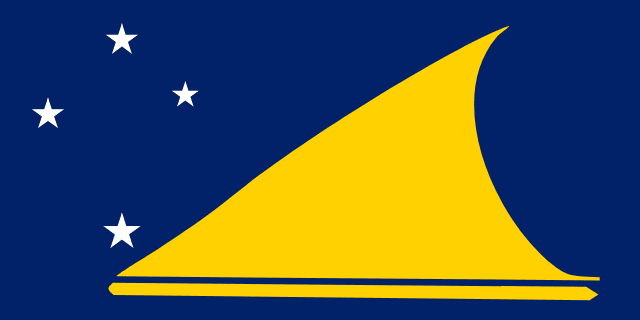
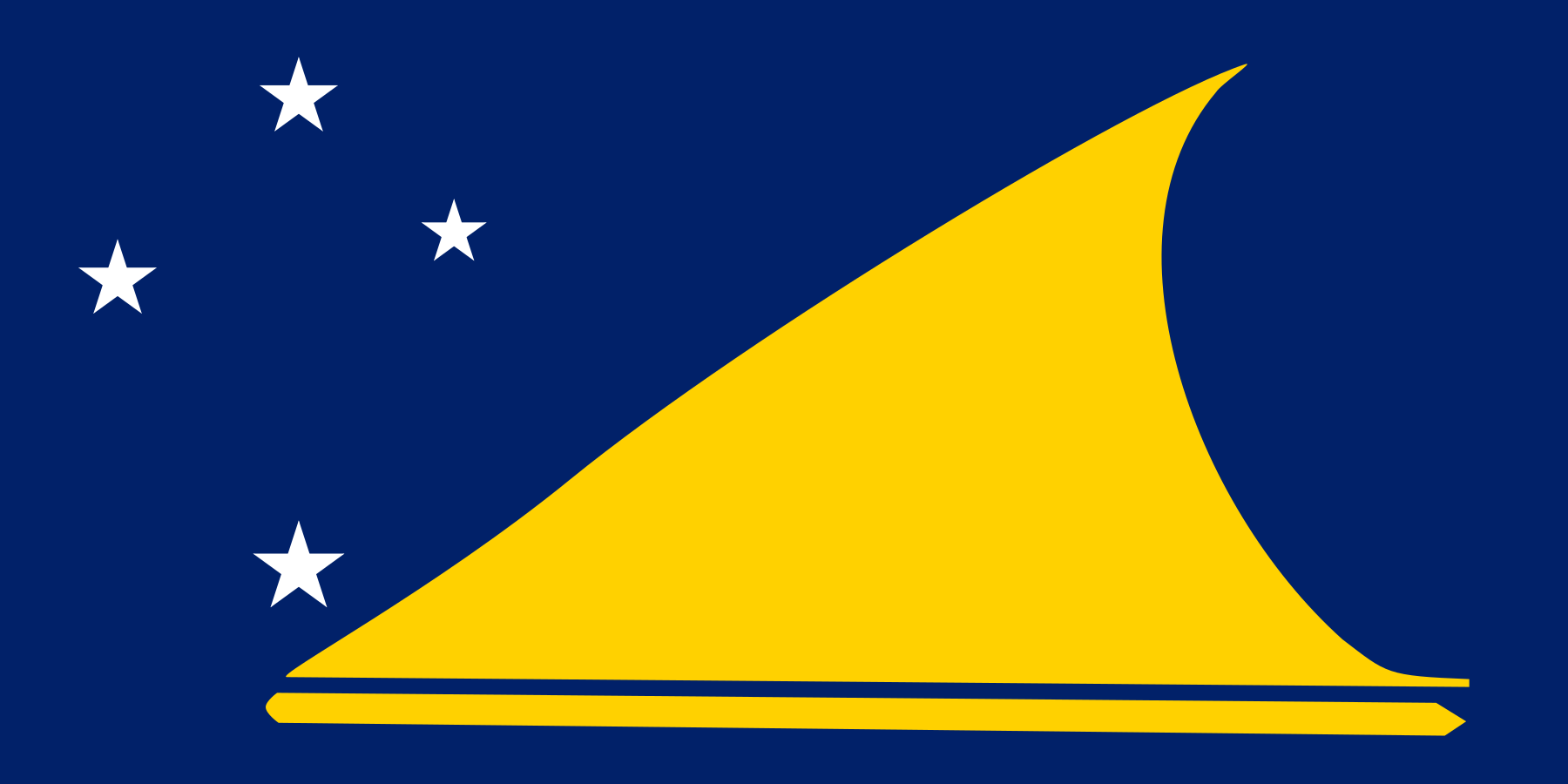
The flag of Tokelau features a stylized yellow vaka, a traditional Polynesian canoe, sailing across a deep blue field toward the Southern Cross. This imagery symbolizes the collective journey of the Tokelauan people toward finding a suitable governance structure and their commitment to a sustainable future. The Southern Cross acts as a navigational guide, reflecting the territory's historical reliance on the stars for seafaring and survival.
Colors & Symbols
The deep blue field represents the Pacific Ocean and the sky, both of which are vital to the livelihood of the islanders. The yellow used for the canoe signifies a happy and peaceful community, while the white of the four stars represents purity, unity among the atolls, and the influence of Christianity on the islands.
For many decades, the flag of New Zealand was the official ensign used by Tokelau. In two thousand and seven, a design competition was launched to create a unique symbol that would reflect the territory's specific cultural identity. The final design was approved by the General Fono in early two thousand and nine and was officially presented to the territory later that year.
Frequently Asked Questions
Tokelau's current flag was officially adopted on 2009.
Tokelau's flag has an official proportion of 1:2.
The vaka represents the history of the Tokelauan people as expert navigators and symbolizes their metaphorical journey toward future self governance.
The stars represent the Southern Cross constellation, which is a vital navigational tool in the Southern Hemisphere and also symbolizes the three main atolls plus Swains Island.
The Southern Cross signifies the geographical location of the islands and acknowledges the territory's ongoing relationship with New Zealand, which also features the constellation on its flag.
The flag was officially presented in September and hoisted for the first time in October two thousand and nine during ceremonies across the atolls.
🍪
Cookie Preferences
We use cookies to analyze traffic and improve your experience. No personal data is sold or shared with advertisers.
We use Google Analytics to understand how visitors use WorldStats. This helps us improve content and performance. Analytics cookies track page views and session data — no personally identifiable information is collected. You can change your preference at any time from the footer.