
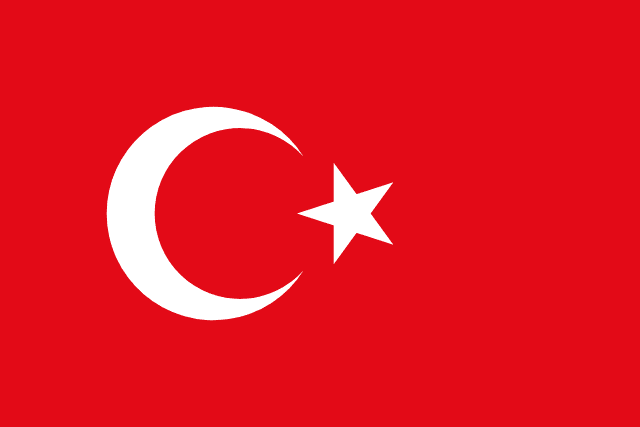
Flag of Turkey
🇹🇷
Flag Meaning
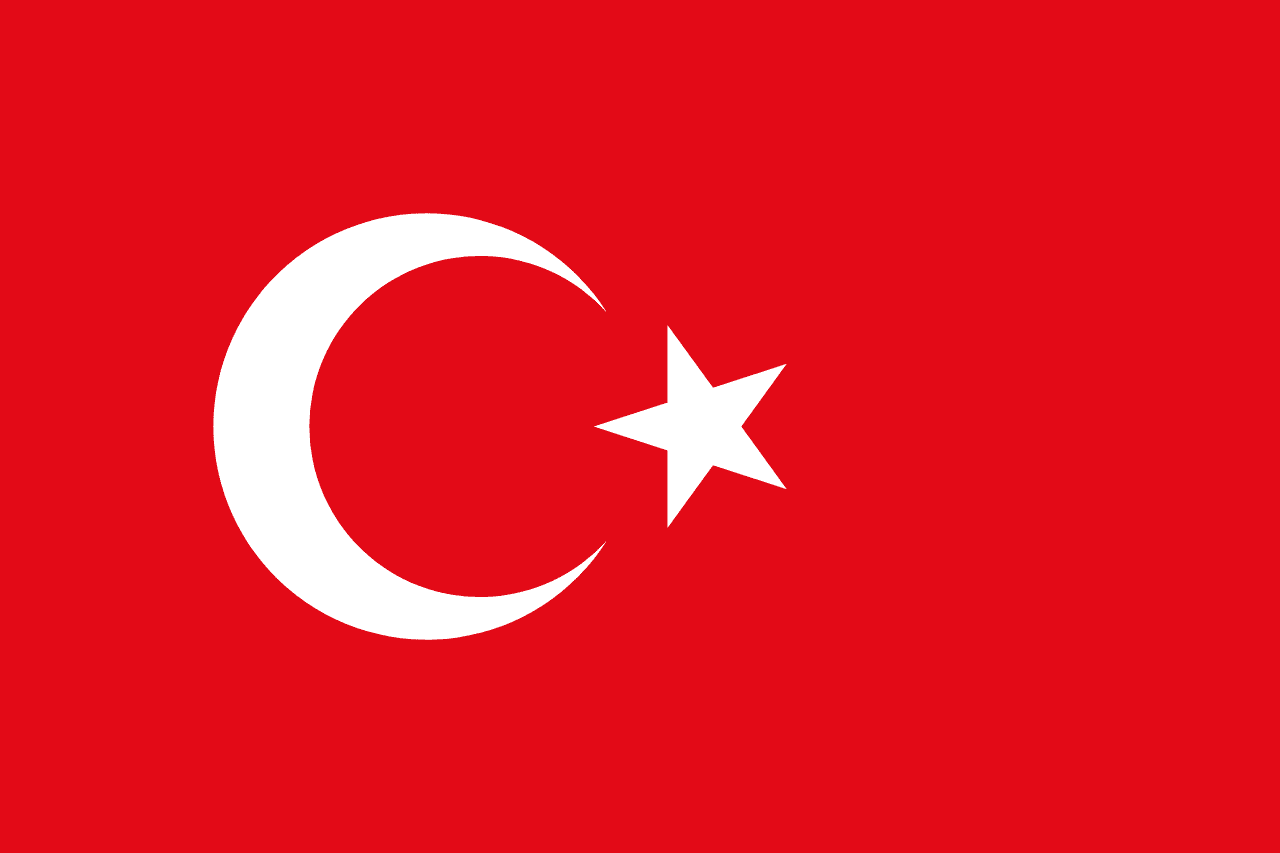
The Turkish flag represents the independence and national identity of the Republic of Turkey through its iconic red field and white symbols. The white crescent and five pointed star are ancient emblems that reflect the celestial heritage and cultural unity of the Turkish people. It is a powerful symbol of the bravery and sacrifice of those who established the nation.
Colors & Symbols
The flag utilizes a vibrant red background and white symbols. Red signifies the blood of martyrs who lost their lives in the struggle for independence, while white represents the purity, sincerity, and peace of the Turkish nation. These colors have been associated with Turkish sovereignty for centuries.
Adopted 1936
Proportions 2:3
Download

Country Statistics
Capital Ankara
Population 86M
Region Asia
ISO-2 TR
Neighboring Flags
 ARM
ARM  AZE
AZE  BGR
BGR  GEO
GEO  GRC
GRC  IRN IRQ
  SYR
SYR Flag History
The current design is a continuation of the late Ottoman Empire flag, which officially incorporated the crescent and star on a red background in the middle of the nineteenth century. Before this period, various designs were used, including green flags for religious authority and flags with multiple crescents. The five pointed star was finalized in 1844, replacing earlier versions that featured stars with more points.
Frequently Asked Questions
Turkey's current flag was officially adopted on 1936.
Turkey's flag has an official proportion of 2:3.
The flag is affectionately known as Al Bayrak, which means the red flag, and Ay Yildiz, which translates to moon star.
A famous legend suggests the design was inspired by the reflection of the moon and a star in a pool of blood on a battlefield after a historic victory.
Yes, Turkish law specifies that the flag must always be treated with respect and cannot be used as clothing, sat upon, or displayed if it is damaged or dirty.
While often associated with the Islamic faith, the crescent is also an ancient Turkic symbol that predates modern religious associations and represents progress and enlightenment.