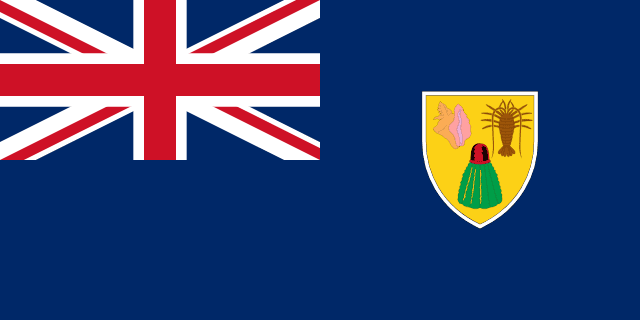
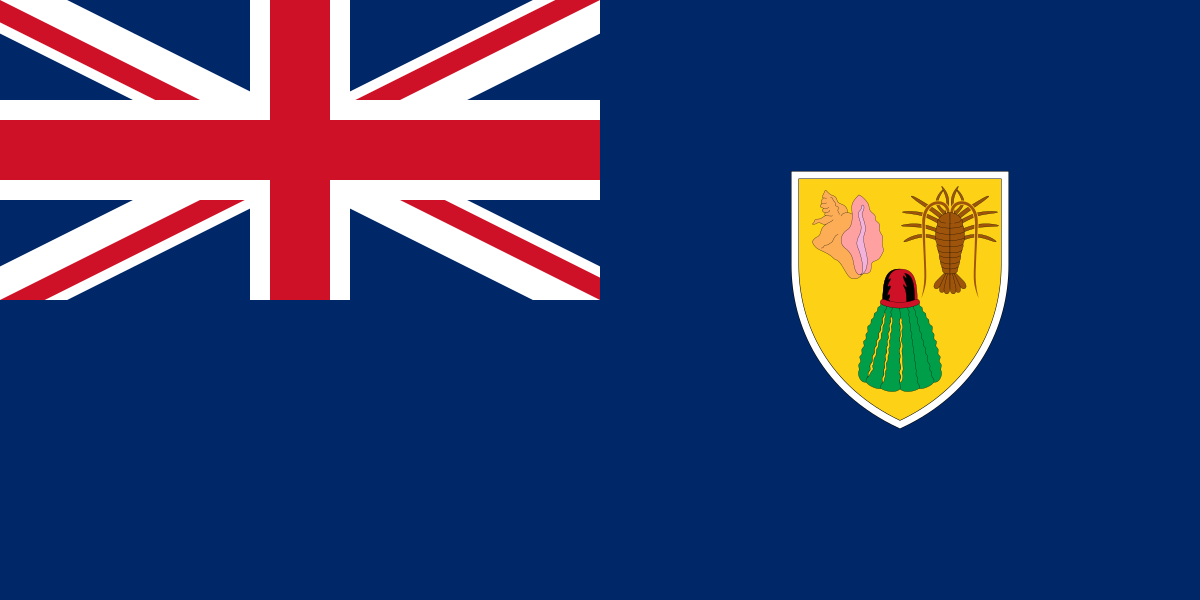
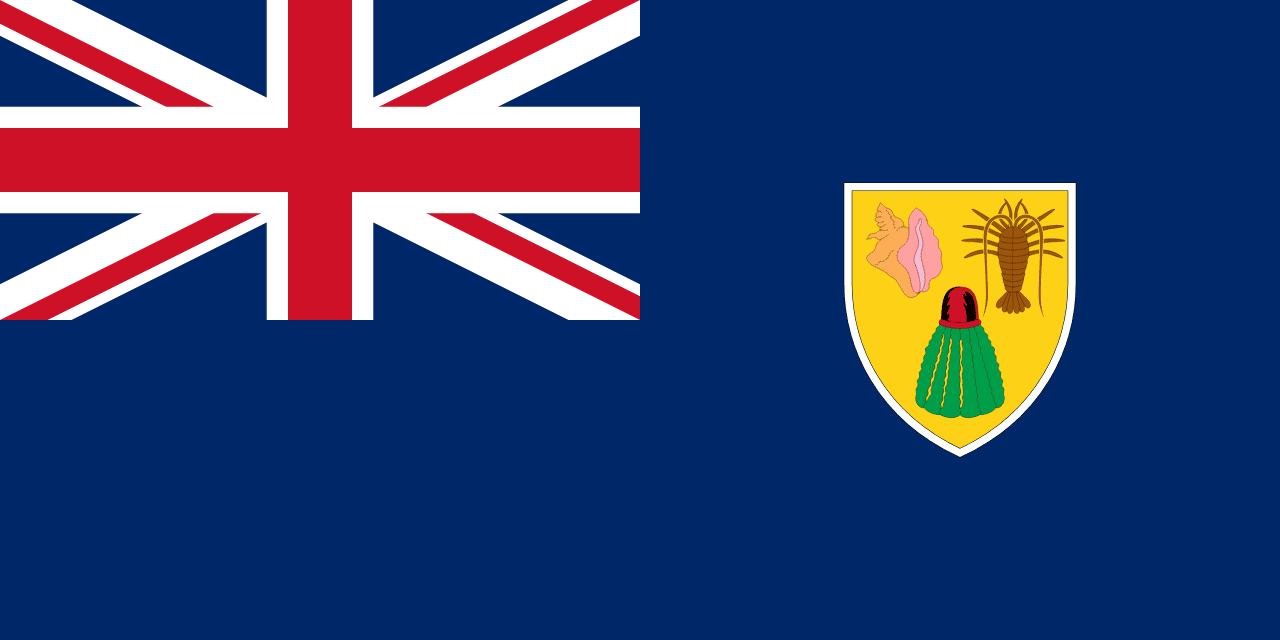
The flag of the Turks and Caicos Islands is a British Blue Ensign featuring the territory's coat of arms on the fly side. The symbols on the shield represent the islands' natural resources and unique identity, specifically highlighting the importance of the maritime environment and local flora. The conch shell and lobster represent the fishing industry, while the cactus serves as a namesake for the islands.
Colors & Symbols
The flag uses the classic dark blue field of the British naval ensign to signify the surrounding Atlantic Ocean. The Union Jack in the canton represents the islands' status as a British Overseas Territory, while the vibrant yellow shield provides a bright backdrop for the natural symbols of the archipelago. The red, white, and blue of the British flag complement the natural tones of the lobster, shell, and cactus.
Before the current design was established, the islands used a colonial badge depicting a salt-making scene with a man raking salt into piles. A famous historical error occurred in 1889 when a London illustrator mistook the white salt piles for igloos and added a door to one of them, leading to the nickname of the 'igloo flag.' This mistake remained on the official flag for nearly eighty years until the modern coat of arms was adopted in the mid twentieth century, with a minor update in 1999 to add a white border and enlarge the shield.
Frequently Asked Questions
Turks and Caicos Islands's current flag was officially adopted on 1968.
Turks and Caicos Islands's flag has an official proportion of 1:2.
The flag features a queen conch shell and a Caribbean spiny lobster, both of which are vital to the local fishing industry and are popular staples of the islands' cuisine.
The Turk's head cactus is native to the islands and is widely believed to be the origin of the 'Turks' portion of the territory's name due to its resemblance to a traditional Turkish fez hat.
The presence of the Union Jack indicates that the Turks and Caicos Islands are a British Overseas Territory under the sovereignty of the United Kingdom.
While not intended, a drawing error in the late nineteenth century added a doorway to a pile of salt, making it look like an igloo; this version was used officially for many decades.
🍪
Cookie Preferences
We use cookies to analyze traffic and improve your experience. No personal data is sold or shared with advertisers.
We use Google Analytics to understand how visitors use WorldStats. This helps us improve content and performance. Analytics cookies track page views and session data — no personally identifiable information is collected. You can change your preference at any time from the footer.