
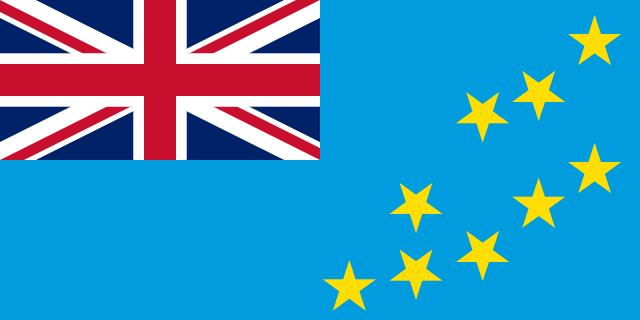
Flag of Tuvalu
🇹🇻
Flag Meaning
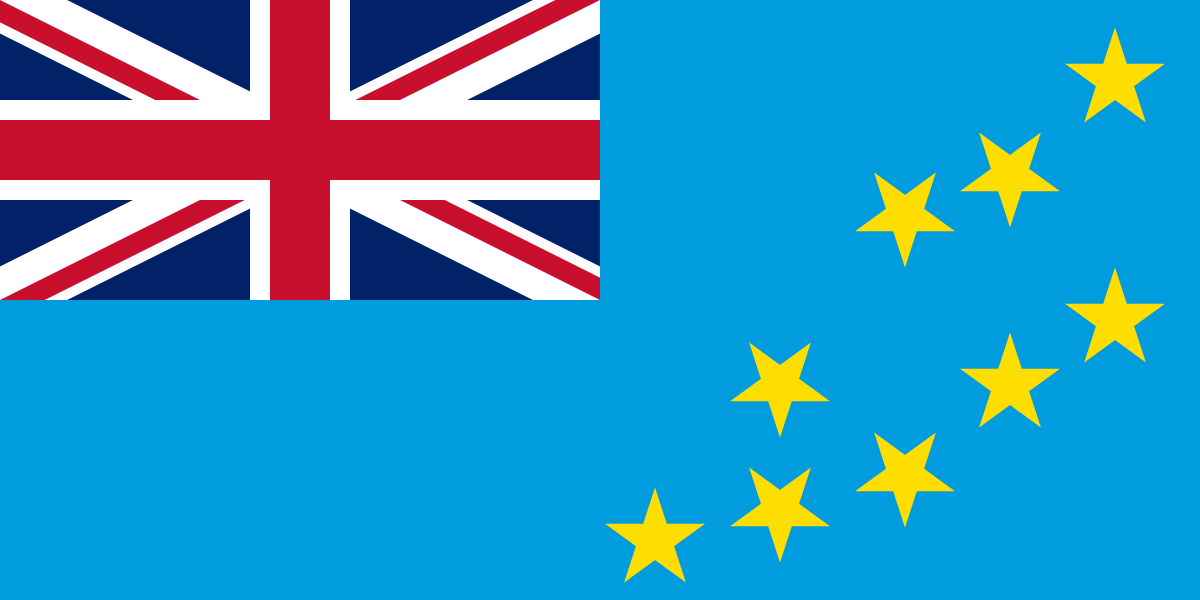
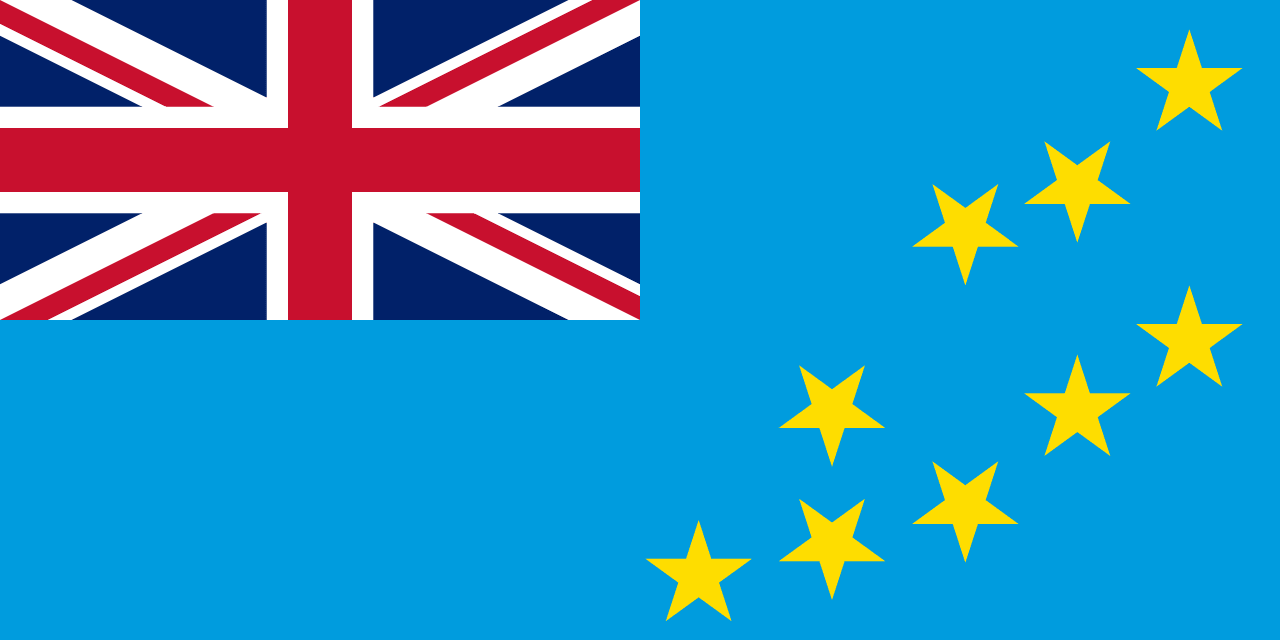
The flag of Tuvalu features a light blue field representing the Pacific Ocean and nine yellow stars that correspond to the islands of the archipelago. The Union Jack in the upper left corner acknowledges the nation historical ties to the United Kingdom and its membership in the Commonwealth. The stars are positioned to reflect the relative geographical layout of the islands as they appear on a map.
Colors & Symbols
Sky blue serves as the primary background color , symbolizing the surrounding ocean and the vast tropical sky . The nine stars are yellow , representing the sun and the warmth of the islands . The Union Jack maintains its traditional red , white , and dark blue , reflecting the country British heritage .
Adopted Originally adopted in 1978 and reinstated in 1997 .
Proportions 1:2
Download
Country Statistics
Capital Funafuti
Population 10.6K
Region Oceania
ISO-2 TV
Flag History
Before independence , Tuvalu was part of the Gilbert and Ellice Islands and used the British Blue Ensign . The current design was first raised when the country gained sovereignty in 1978 . A brief period in the mid 1990s saw the introduction of a new flag without the Union Jack , but it was replaced by the original version due to public preference for the independence era design .
Frequently Asked Questions
Tuvalu's current flag was officially adopted on Originally adopted in 1978 and reinstated in 1997 ..
Tuvalu's flag has an official proportion of 1:2.
The name refers to the eight islands that were traditionally inhabited , while the ninth star represents Niulakita , which was settled more recently .
The stars are not placed randomly ; they are arranged to mimic the geographic locations of the islands on a map .
The flag was designed by Vione Natano , a local artist who won a nationwide competition .
The government introduced a design without the Union Jack to move toward a more republican identity , but the original flag was brought back after widespread public protest .