
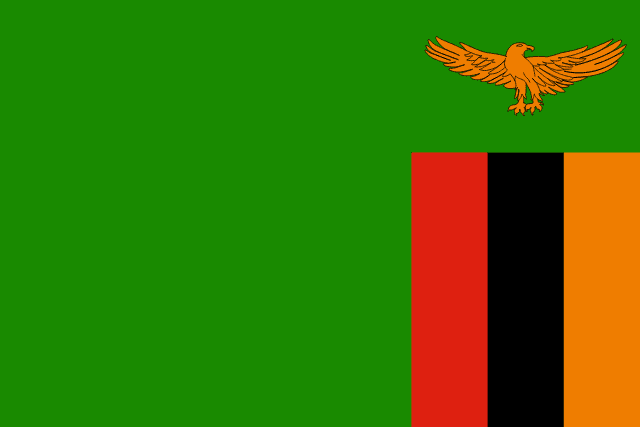
Flag of Zambia
🇿🇲
Flag Meaning
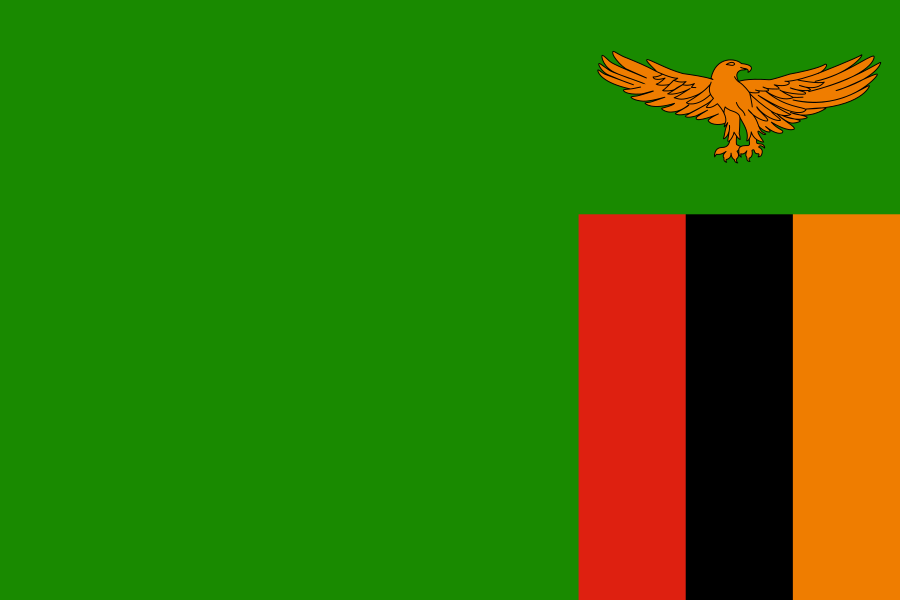
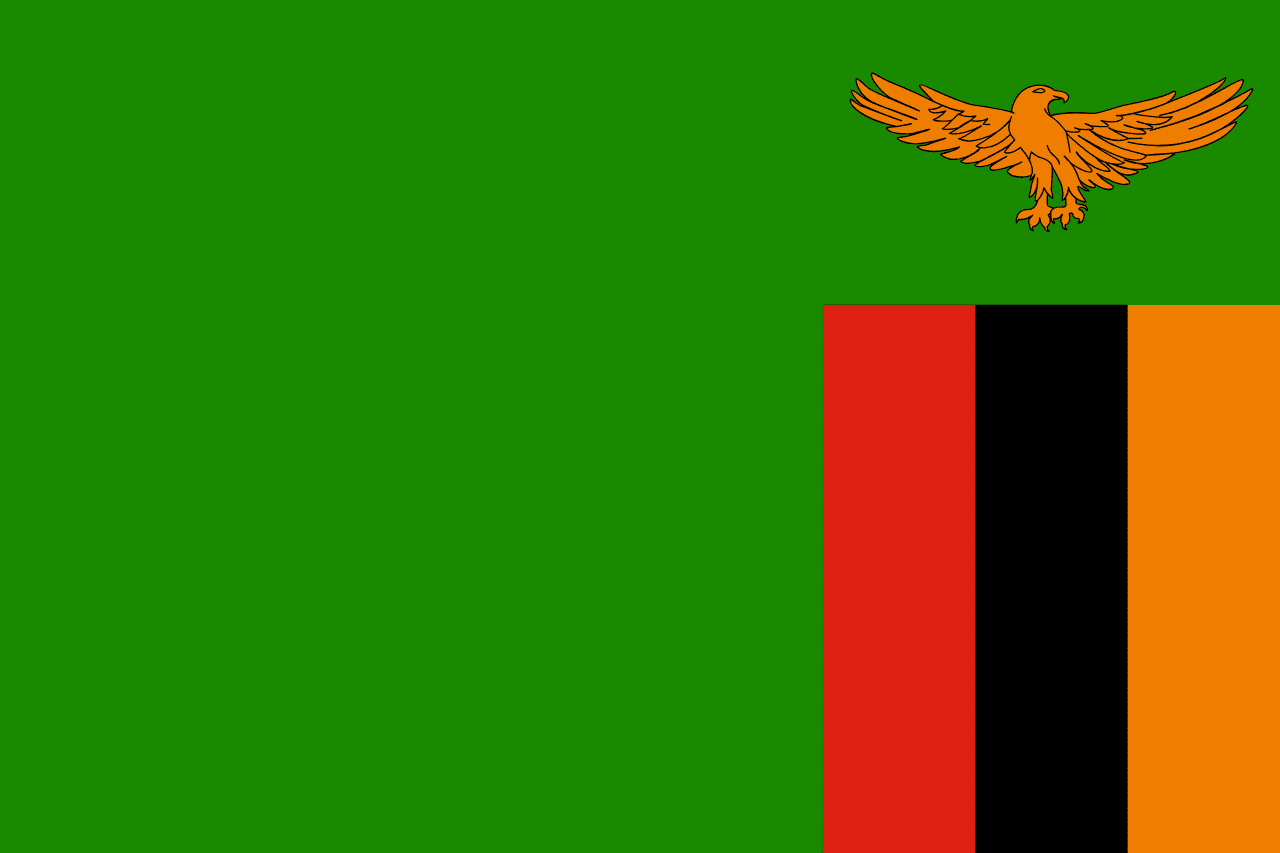
The flag of Zambia is a unique national symbol featuring a green field with a distinct set of emblems positioned in the fly corner rather than the hoist. It depicts an orange African fish eagle in flight above three vertical stripes of red, black, and orange, representing the nation's spirit and its ability to rise above challenges. This soaring bird is a symbol of liberty and the national ambition to overcome obstacles.
Colors & Symbols
The primary green field signifies the nation's lush vegetation and agricultural wealth. The three vertical stripes use red to honor the struggle for freedom, black to represent the Zambian people, and orange to symbolize the country's rich mineral resources, particularly copper. The orange eagle reinforces the connection to natural wealth while highlighting the theme of freedom.
Adopted 1964
Proportions 2:3
Download
Country Statistics
Capital Lusaka
Population 20M
Region Africa
ISO-2 ZM
Neighboring Flags
 AGO
AGO  BWA
BWA  COD
COD  MWI
MWI  MOZ
MOZ  NAM
NAM  TZA
TZA  ZWE
ZWE Flag History
The current flag was first hoisted on October 24, 1964, to mark the nation's independence from British colonial rule. Designed by Gabriel Ellison, it replaced the British Blue Ensign that had been used when the territory was known as Northern Rhodesia. In 1996, the flag underwent a slight modification where the original dark green field was replaced with a more vibrant, lighter shade of green.
Frequently Asked Questions
Zambia's current flag was officially adopted on 1964.
Zambia's flag has an official proportion of 2:3.
The flag was designed by Gabriel Ellison, a prominent Zambian artist who also designed the national coat of arms and many of the country's early postage stamps.
Unlike most national flags that place emblems in the center or near the hoist, Zambia's eagle and stripes are located in the lower fly corner, which is the side furthest from the flagpole.
Orange is highly significant because it represents Zambia's vast mineral wealth, specifically copper, which has historically been a cornerstone of the national economy.
The bird is an African fish eagle, which is the national bird of Zambia and appears on both the flag and the national coat of arms.