
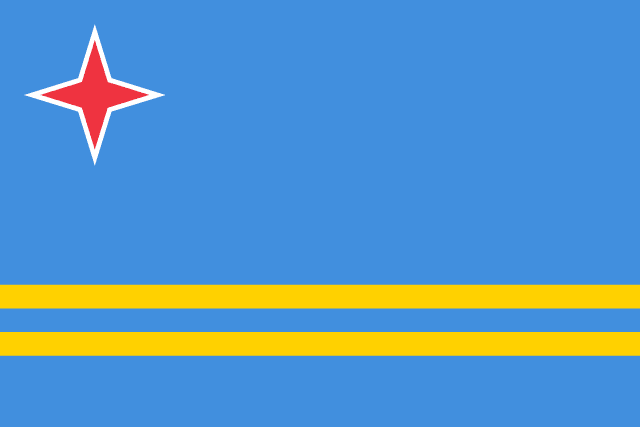
Flag of Aruba
🇦🇼
Flag Meaning
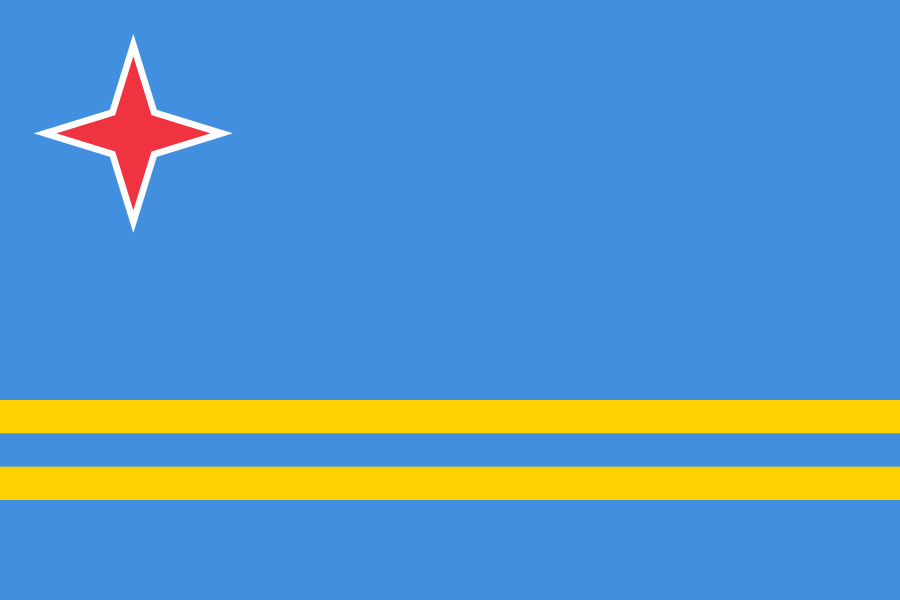
The flag of Aruba represents the island's unique identity and the unity of its diverse population, which includes more than forty different nationalities. Its central symbol, a four pointed red star, signifies the four cardinal directions from which people travel to the island and reflects the land itself surrounded by the ocean. The horizontal stripes further denote the island's path toward autonomy and its distinct status within the Caribbean region.
Colors & Symbols
The light blue field represents the surrounding Caribbean Sea and the sky, while the two narrow yellow stripes symbolize the abundance of sunlight and historical resources like gold and oil. The red star signifies the red soil and the heritage of the people, bordered by white to represent the famous white sand beaches and the purity of the local spirit.
Adopted 1976
Proportions 2:3
Download

Country Statistics
Capital Oranjestad
Population 107.6K
Region Americas
ISO-2 AW
Flag History
The current design was selected from nearly seven hundred entries in a public competition held as the island sought greater self governance. It was officially raised for the first time in March 1976 to replace the flag of the Netherlands Antilles and establish a separate national identity. The final design was refined with the assistance of a professional flag expert to ensure its symbolic elements properly captured the Aruban culture.
Frequently Asked Questions
Aruba's current flag was officially adopted on 1976.
Aruba's flag has an official proportion of 2:3.
The four points of the star represent the cardinal directions of a compass, symbolizing that the people of the island come from all over the world to live together in harmony.
The two narrow stripes represent the importance of the sun and the island's historical industries, such as gold and phosphate mining, as well as the local yellow flora.
The specific shade of blue represents the Caribbean Sea and the sky that encompass the island, often associated with peace and hope for the future.
The island observes a national holiday every March 18 to commemorate the date the flag was officially adopted and first hoisted during a public ceremony.