

Flag of Canada
🇨🇦
Flag Meaning
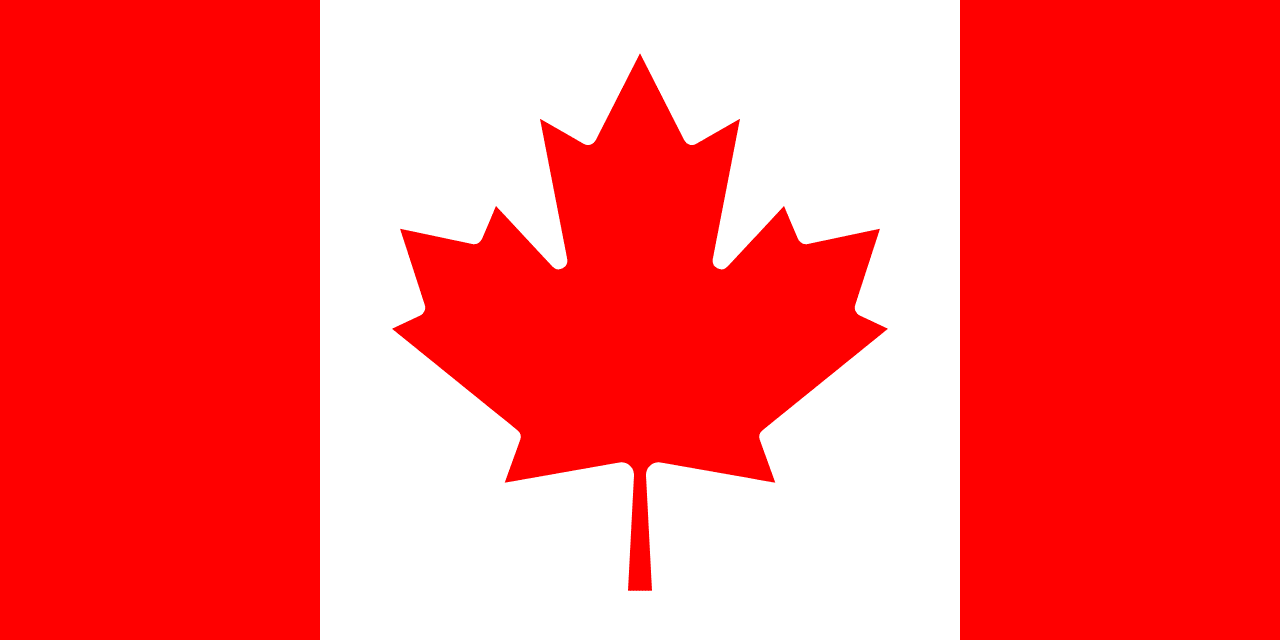
The flag of Canada, widely known as the Maple Leaf, features a central white square with a stylized red maple leaf and two red vertical bands on the sides. The maple leaf represents the natural heritage and cultural identity of the nation, while the two red bars symbolize the Atlantic and Pacific Oceans. It serves as a powerful emblem of unity and national pride for all citizens.
Colors & Symbols
The official colors are red and white, which were proclaimed by King George V in 1921. Red is traditionally associated with British heritage and the sacrifice of Canadians in past conflicts, while white represents the peaceful nature of the country and its historical connection to France.
Adopted 1965
Proportions 1:2
Download

Country Statistics
Capital Ottawa
Population 42M
Region Americas
ISO-2 CA
Neighboring Flags
 USA
USA Flag History
Before the current design was selected, Canada used the Canadian Red Ensign which featured the British Union Jack. The Great Flag Debate of 1964 led a parliamentary committee to choose the single leaf design created by George Stanley over several other proposals. One rejected version, known as the Pearson Pennant, featured three maple leaves between two blue bars.
Frequently Asked Questions
Canada's current flag was officially adopted on 1965.
Canada's flag has an official proportion of 1:2.
The eleven points were chosen after wind tunnel tests showed that this specific design remained the most recognizable when the flag was blowing in high winds.
Yes, the central white portion of the flag is a square that is exactly half the total width of the flag, a unique heraldic feature known as a Canadian pale.
George Stanley, a historian and dean of arts at the Royal Military College of Canada, created the design based on the college's own flag.
It is celebrated every year on February 15 to commemorate the day the flag was first raised on Parliament Hill in 1965.