

Flag of Finland
🇫🇮
Flag Meaning
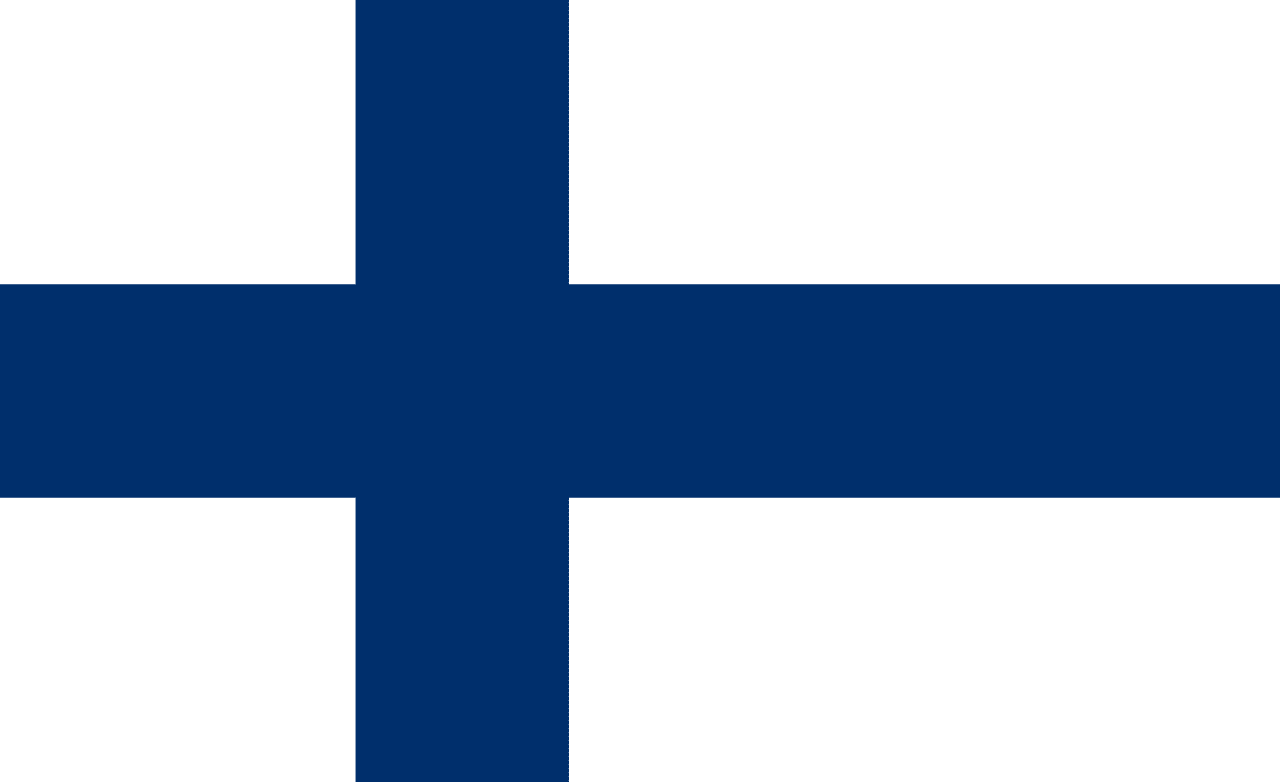
The flag of Finland features a blue Nordic cross on a white field, representing the country's natural landscape and its cultural connection to other Nordic nations. The white background symbolizes the snow that covers the land during the long winter months, while the blue cross represents the thousands of lakes and the clear sky. This design serves as a powerful emblem of national identity and sovereignty.
Colors & Symbols
The flag consists of two primary colors: a specific shade of sea blue and a pure white. The blue is officially defined by international color standards to represent the Finnish waters and the heavens, while the white reflects the Arctic snow. These colors were chosen to evoke the unique physical environment of the country.
Adopted 1918
Proportions 11:18
Download

Country Statistics
Capital Helsinki
Population 5.7M
Region Europe
ISO-2 FI
Neighboring Flags
 NOR
NOR  SWE
SWE  RUS
RUS Flag History
Following its independence from the Russian Empire, Finland held a design competition to create a new national symbol. The current blue and white design replaced earlier versions that featured the red and yellow colors of the national coat of arms. Artists Eero Snellman and Bruno Tuukkanen finalized the design, drawing inspiration from nineteenth-century cultural proposals to create the iconic Nordic cross layout.
Frequently Asked Questions
Finland's current flag was officially adopted on 1918.
Finland's flag has an official proportion of 11:18.
The flag is widely known as Siniristilippu, which translates to Blue Cross Flag.
The final design was created by artists Eero Snellman and Bruno Tuukkanen in the early twentieth century.
Yes, the state flag includes the national coat of arms at the center of the cross, and the military uses a swallow-tailed version.
The national flag day is traditionally observed on Midsummer Day every year.