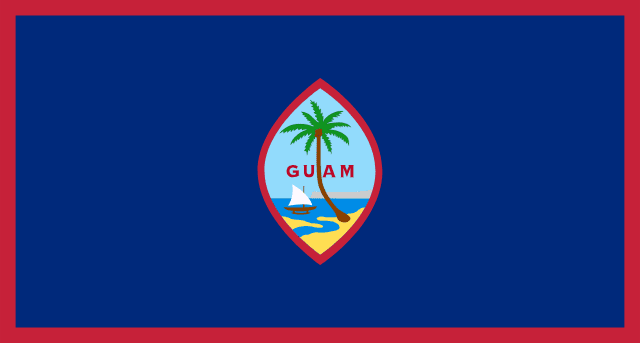
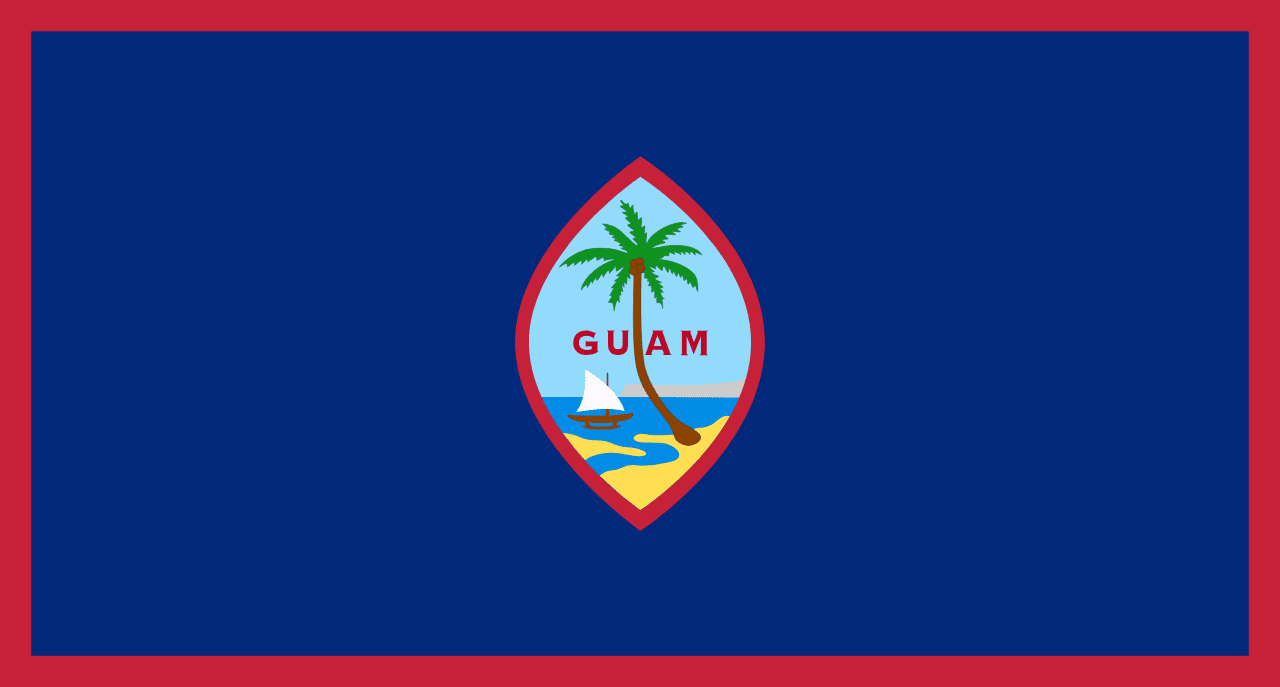
The flag of Guam features a central almond-shaped seal that represents a traditional Chamorro sling stone used for hunting and warfare. Within the seal, a flying proa sails in Hagatna Bay, symbolizing the maritime heritage and seafaring courage of the indigenous people. The scene is completed by a lone coconut palm and the Two Lovers Point cliff, representing the island's resilience and natural landmarks.
Colors & Symbols
The deep blue field represents the vast Pacific Ocean and the sky that surround the island. A thin red border was added to the edges of the flag to commemorate the blood shed by the people during Spanish colonial rule and the occupation of the island during World War II. Inside the seal, various natural tones like brown, green, and yellow depict the tropical environment and sandy shores of the territory.
The flag was originally designed in 1917 by Helen Paul, the wife of a United States naval officer, and was officially designated as the island flag in 1931. The design was modified in 1948 with the addition of the red border to honor the sacrifices made by the population during the second global conflict. Prior to the adoption of this specific banner, the island was represented by the national flags of Spain, the United States, and Japan during their respective periods of administration.
Frequently Asked Questions
Guam's current flag was officially adopted on 1948.
Guam's flag has an official proportion of 22:41.
The shape of the central emblem is inspired by the traditional sling stones used by ancient Chamorro warriors for hunting and defense.
The proa is a traditional outrigger canoe that symbolizes the exceptional seafaring skills and courage of the indigenous people who navigated the Pacific Ocean.
The red border was added to the design in 1948 to commemorate the blood spilled during the island's history, particularly during the hardships of World War II.
The lone coconut palm represents resilience and survival, as it is a tree that can grow in poor soil and withstand the force of tropical storms.
The cliff in the background represents Two Lovers Point, also known as Puntan Dos Amantes, which is a significant cultural and geographic landmark on the island.
🍪
Cookie Preferences
We use cookies to analyze traffic and improve your experience. No personal data is sold or shared with advertisers.
We use Google Analytics to understand how visitors use WorldStats. This helps us improve content and performance. Analytics cookies track page views and session data — no personally identifiable information is collected. You can change your preference at any time from the footer.