
Flag of Iran
🇮🇷
Flag Meaning
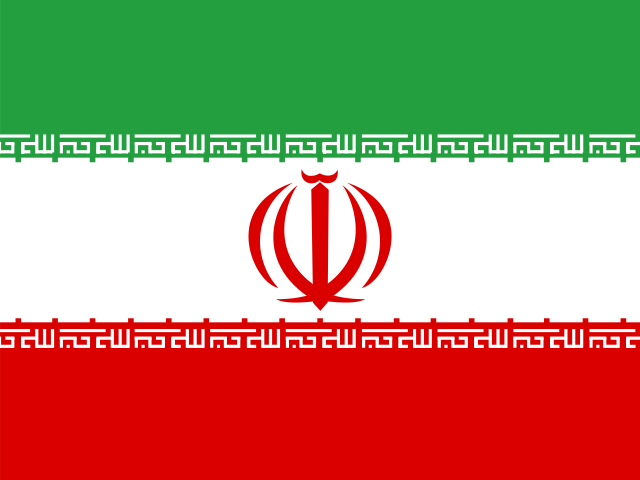
The flag of Iran features a central emblem that is a stylized representation of the word Allah, designed to resemble a tulip in honor of those who died for the nation. Along the inner edges of the green and red stripes, the phrase Allahu Akbar is repeated twenty-two times in Kufic script to commemorate the date of the Islamic Revolution. This combination of calligraphy and imagery reflects the country's deep religious and political identity.
Colors & Symbols
Green symbolizes the Islamic faith, growth, and vitality, while white represents peace and honesty. Red stands for bravery, courage, and the blood shed by martyrs in the struggle for independence and justice.
Adopted 1980
Proportions 4:7
Download
Country Statistics
Capital Tehran
Population 86M
Region Asia
ISO-2 IR
Neighboring Flags
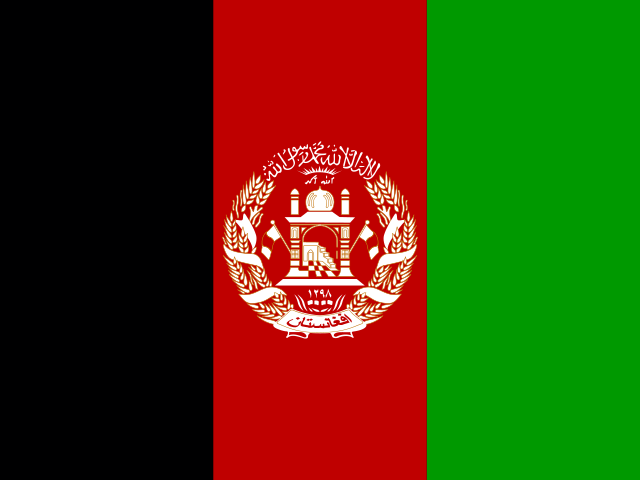
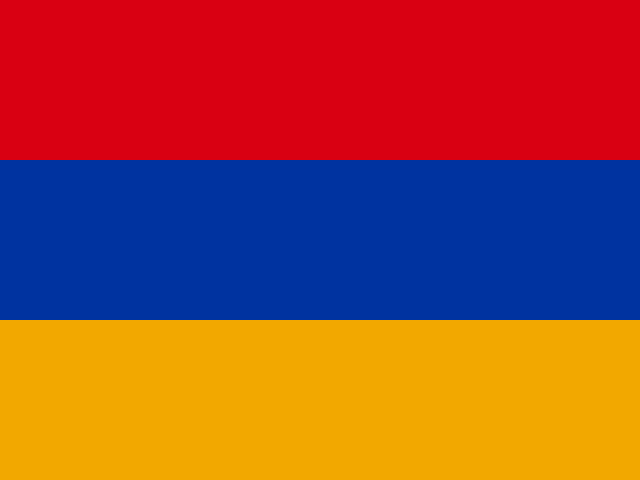
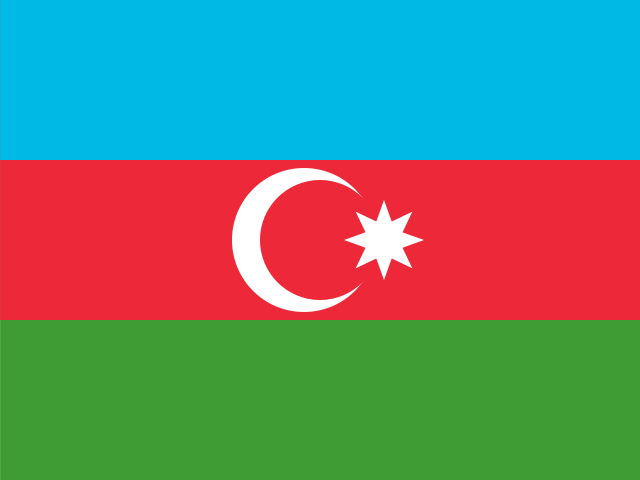
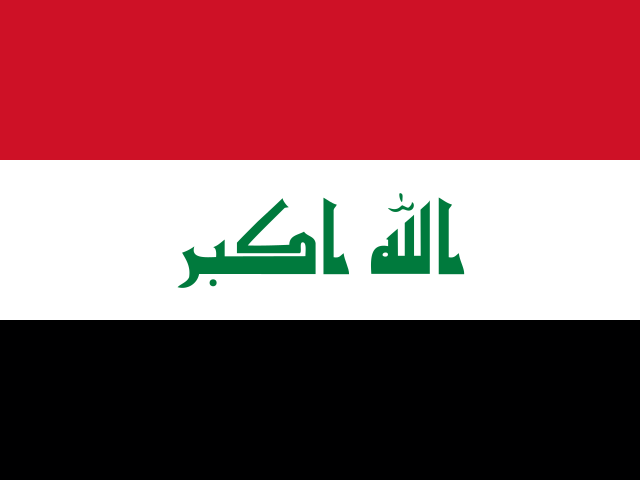

Flag History
For centuries, the Iranian flag featured the lion and sun motif, an ancient symbol representing royalty and astrological configurations. Following the revolution in the late twentieth century, the new government replaced the monarchical symbols with the current Islamic emblem and script. The green, white, and red tricolor itself was first established as the national standard in the early 1900s.
Frequently Asked Questions
Iran's current flag was officially adopted on 1980.
Iran's flag has an official proportion of 4:7.
The central emblem is a stylized monogram of the word Allah and is shaped like a tulip to symbolize martyrdom and the five principles of Islam.
The phrase is repeated twenty-two times to honor the twenty-second day of the eleventh month in the Iranian calendar, which marks the victory of the Islamic Revolution.
Before the current design was adopted, the flag featured a lion holding a sword with a rising sun behind it, a symbol known as the Shir-o-Khorshid.
The current national emblem and the overall layout of the modern flag were designed by Hamid Nadimi.