
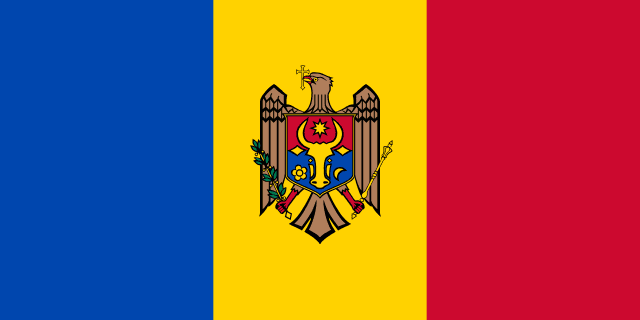
Flag of Moldova
🇲🇩
Flag Meaning
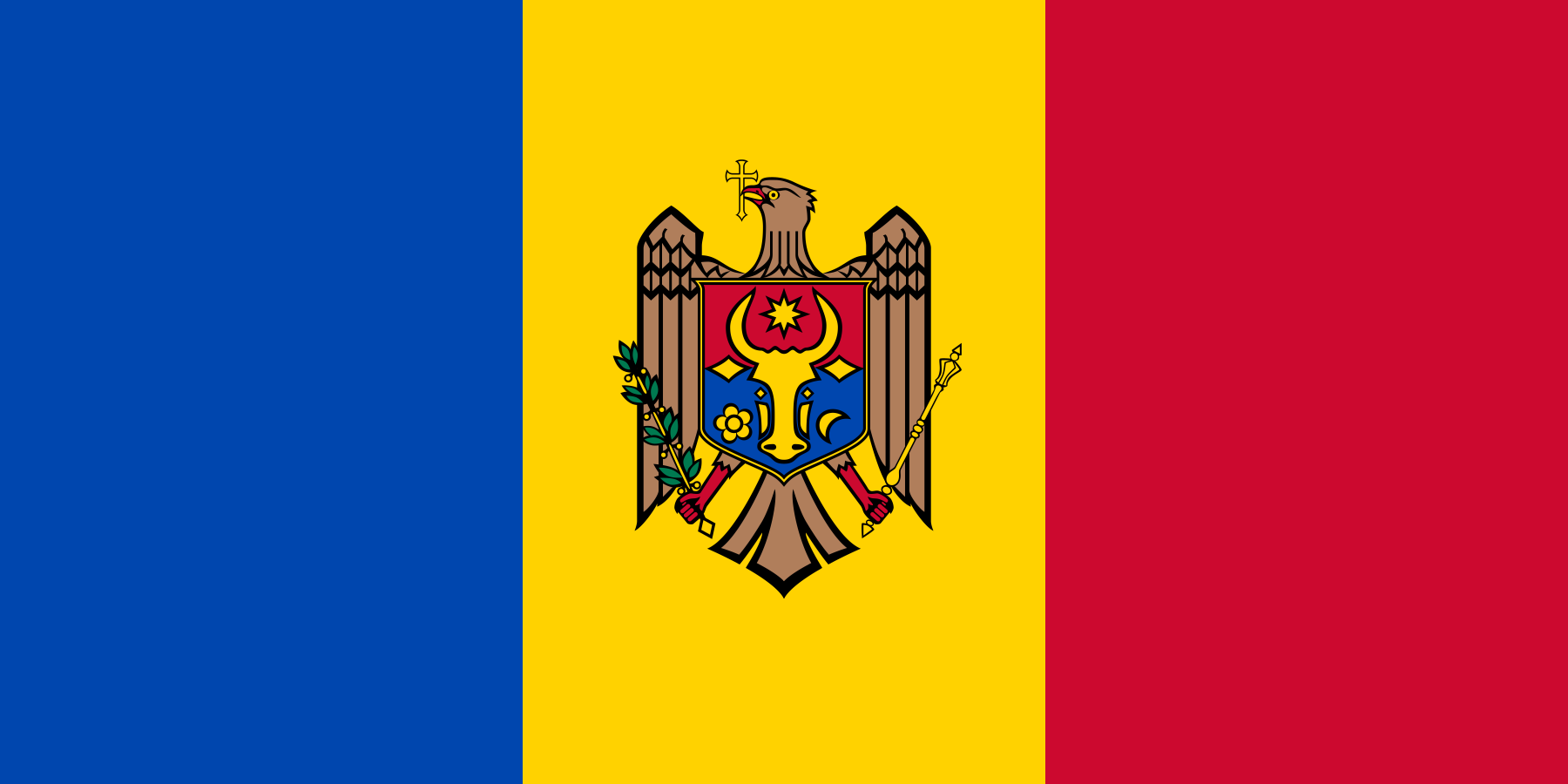
The national flag of Moldova is a vertical tricolor consisting of blue, yellow, and red bands with the state coat of arms positioned in the center of the yellow stripe. This emblem features a dark golden eagle holding a Christian cross in its beak, an olive branch for peace in one claw, and a scepter for sovereignty in the other. A shield on the eagle's breast displays the head of an aurochs, which is a traditional symbol of the historical region of Moldavia.
Colors & Symbols
The blue stripe symbolizes the sky and the liberty of the nation, while the yellow represents the sun and the prosperity of the country's fertile lands. The red stripe signifies the courage and sacrifice of the people who fought for freedom and independence throughout history.
Adopted 1990
Proportions 1 to 2
Download

Country Statistics
Capital Chișinău
Population 2.7M
Region Europe
ISO-2 MD
Neighboring Flags
 ROU
ROU  UKR
UKR Flag History
The current tricolor was officially adopted in 1990 as the nation moved toward independence, reflecting its cultural and historical ties to the region. During the period of Soviet rule from 1952 until 1990, the territory used a red flag with a central horizontal green stripe and socialist symbols. Earlier, the Moldavian Democratic Republic of 1917 had utilized a similar tricolor featuring the head of an aurochs on its central band.
Frequently Asked Questions
Moldova's current flag was officially adopted on 1990.
Moldova's flag has an official proportion of 1 to 2.
The flag features a golden eagle that holds a shield on its chest, which in turn displays the head of an aurochs, an extinct species of wild cattle that was the ancient symbol of the Principality of Moldavia.
Although both flags use identical blue, yellow, and red vertical stripes, the Moldovan flag is distinguished by the inclusion of a central coat of arms and its unique width to length ratio of one to two.
The eagle holds an olive branch in its right claw to signify peace, a golden scepter in its left claw to represent sovereignty, and a cross in its beak to reflect the spiritual heritage of the nation.