
Flag of Mongolia
🇲🇳
Flag Meaning
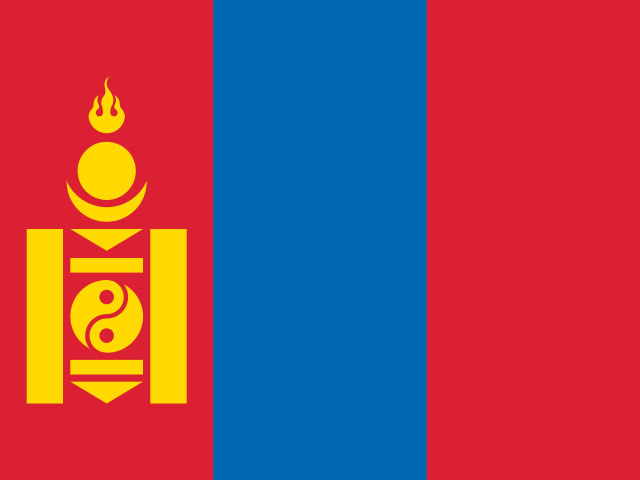
The flag of Mongolia features three vertical bands of red, blue, and red, with a yellow national emblem known as the Soyombo on the leftmost stripe. The central blue band symbolizes the eternal blue sky, a sacred concept in Mongolian tradition and history. The red stripes on either side represent progress, prosperity, and the enduring strength of the people. The Soyombo is a complex symbol that incorporates representations of fire, celestial bodies, and the balance of nature to signify national independence.
Colors & Symbols
Blue is used to represent the eternal sky, reflecting the nation's nomadic heritage and spiritual connection to the heavens. Red stripes signify the vitality and freedom of the country as it moves toward a modern future. The yellow color of the Soyombo symbol is traditionally associated with gold and the historical influence of Buddhism on the nation's culture.
Adopted 1992
Proportions 1:2
Download
Country Statistics
Capital Ulan Bator
Population 3.5M
Region Asia
ISO-2 MN
Neighboring Flags

Flag History
The current layout was largely established in the mid twentieth century, though it underwent a significant change during the transition to democracy. In the years following the second world war, the flag included a gold star above the Soyombo to represent socialist ideals. This star was removed in 1992 to reflect the nation's new political identity as a democratic state. Earlier designs from the 1911 independence era often utilized yellow fields with various religious and national motifs.
Frequently Asked Questions
Mongolia's current flag was officially adopted on 1992.
Mongolia's flag has an official proportion of 1:2.
The Soyombo is an ancient national emblem with components representing fire for growth, the sun and moon for eternity, and triangles and rectangles for stability and protection.
The circular element in the center of the Soyombo represents two fish, which symbolize vigilance and wisdom because fish are believed to never close their eyes.
The three tongues of the flame represent the past, the present, and the future, signifying the continuous prosperity and revival of the Mongolian people.
The primary change made in 1992 was the removal of the gold five pointed star that previously sat atop the Soyombo symbol during the socialist period.