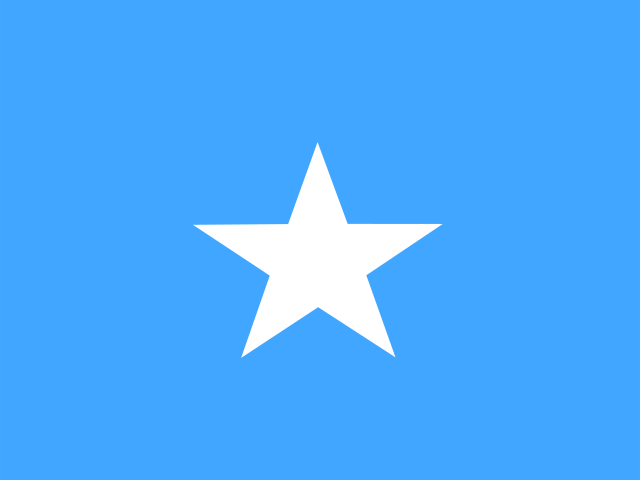
The flag of Somalia features a central white five-pointed star known as the Star of Unity on a field of light blue. This star serves as a powerful symbol of the Somali people and their ethnic identity, with its five points representing the historical regions where they resided. The design emphasizes a vision of national harmony and the aspiration to bring together a divided population under a single banner of independence.
Colors & Symbols
The light blue background was chosen as a tribute to the United Nations for its role in the country's transition to sovereignty and also represents the expansive sky and the surrounding Indian Ocean. The white color of the central star signifies peace, prosperity, and the bright future envisioned for the nation and its citizens.
Designed by the scholar Mohammed Awale Liban, the flag was officially adopted on October 12, 1954, during the period of the United Nations Trust Territory. It was later retained as the national emblem when the former British and Italian territories unified to form the Somali Republic in 1960. Before this design, the region saw various banners including those of the Adal and Ajuran Sultanates, which often featured crescent moons on red, white, or yellow fields.
Frequently Asked Questions
Somalia's current flag was officially adopted on 1954.
Somalia's flag has an official proportion of 2:3.
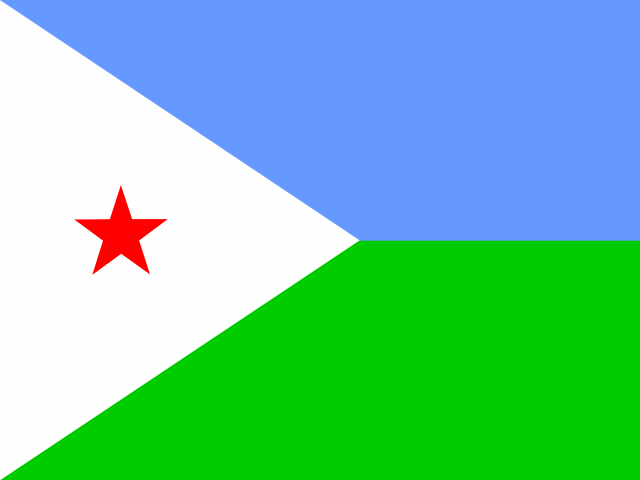
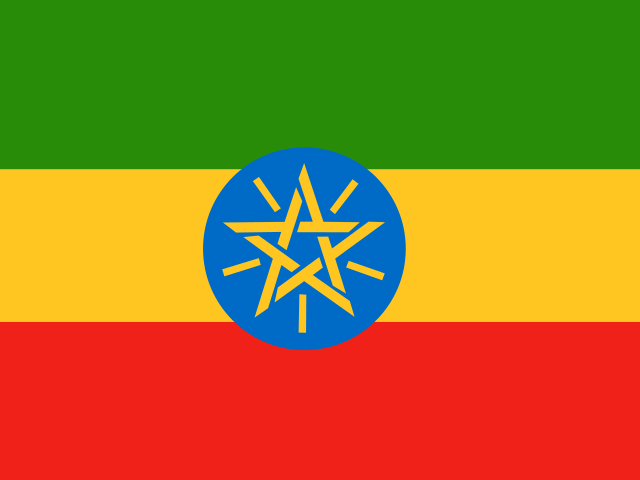
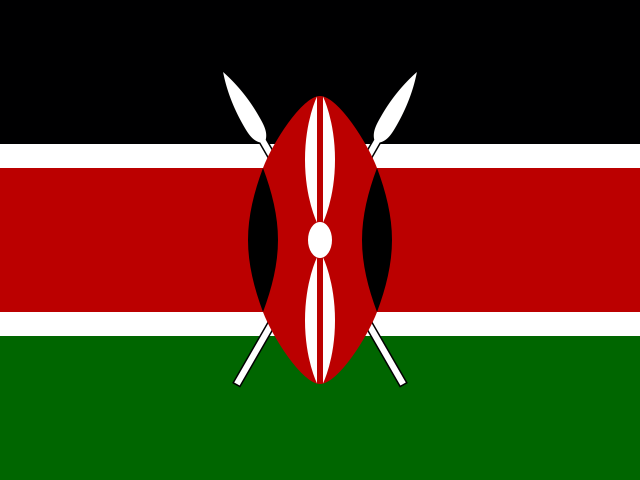
Each point of the Star of Unity represents one of the five historical regions inhabited by the Somali people: British Somaliland, Italian Somaliland, French Somaliland (Djibouti), the Ogaden region of Ethiopia, and the Northern Frontier District of Kenya.
The flag was designed by Mohammed Awale Liban, who created the emblem in less than twenty four hours to provide the nation with a unique identity during its preparation for independence.
The light blue field was specifically chosen to honor the United Nations for the assistance and support provided during the country's trusteeship period and its path toward self-governance.
The basic design of the Somali flag has remained consistent since its adoption in the mid twentieth century, serving as a stable symbol of national identity through various political eras.
🍪
Cookie Preferences
We use cookies to analyze traffic and improve your experience. No personal data is sold or shared with advertisers.
We use Google Analytics to understand how visitors use WorldStats. This helps us improve content and performance. Analytics cookies track page views and session data — no personally identifiable information is collected. You can change your preference at any time from the footer.