
Flag of Namibia
🇳🇦
Flag Meaning
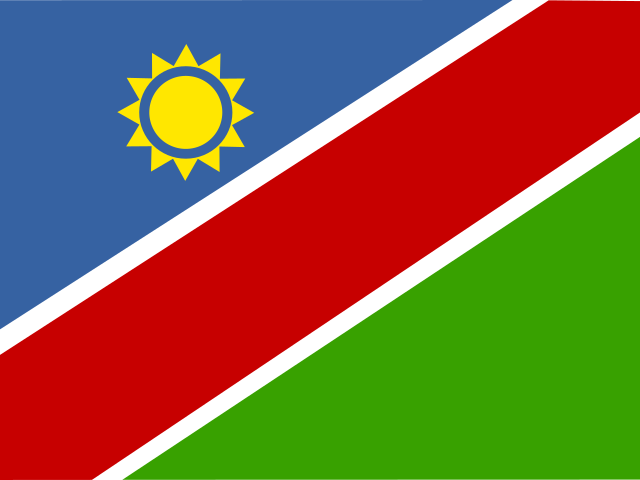
The flag of Namibia is a powerful symbol of national unity, peace, and the collective loyalty of its citizens. Its diagonal design represents a nation moving forward into a bright future, while the sun symbolizes life, energy, and the warmth of the country. The overall layout is intended to reflect the diverse heritage of the land and the harmony of its people.
Colors & Symbols
Blue represents the clear Namibian sky and the Atlantic Ocean, while green symbolizes the country's vegetation and agricultural potential. Red signifies the heroism of the people and their determination to achieve equal opportunity, while white stands for peace and unity.
Adopted 1990
Proportions 2:3
Download
Country Statistics
Capital Windhoek
Population 3M
Region Africa
ISO-2 NA
Neighboring Flags

Flag History
The current national flag was selected through a public competition that received over eight hundred entries after the country gained independence. The final design combined elements from several top submissions and was refined by the State Herald to represent the identity of the new republic. Before this, the territory was administered under the banners of the German Empire and later the flag of South Africa during the colonial period.
Frequently Asked Questions
Namibia's current flag was officially adopted on 1990.
Namibia's flag has an official proportion of 2:3.
The twelve rays of the golden sun represent the different ethnic groups that make up the nation, showing their unity under one sun.
The design was a collaborative result of a national competition, with the final version credited to several winners including Don Stevenson, Ortrud Clay, and Theo Jankowski.
The golden-yellow color of the sun represents the warmth of the nation and the vast plains of the Namib Desert.
These colors were inspired by the flag of the South West Africa People's Organization, which played a central role in the movement for independence.