
Flag of Thailand
🇹🇭
Flag Meaning
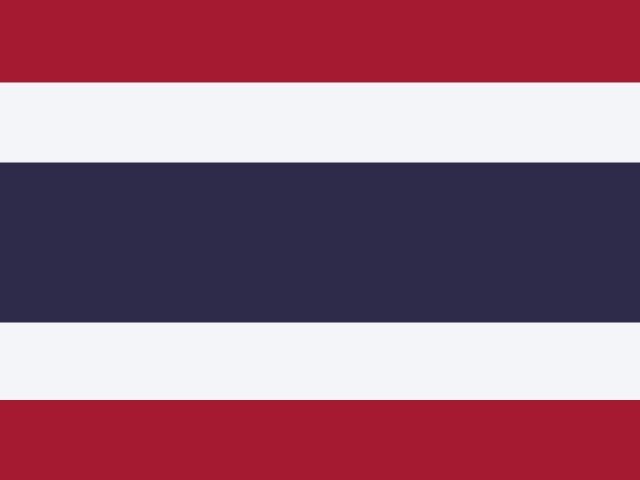
The flag of Thailand, known as the Trairanga, symbolizes the three pillars of the Thai nation which are the people, their religion, and the monarchy. This design reflects the country's unity and its deep-rooted respect for the central institutions that define its identity and culture.
Colors & Symbols
Red represents the blood shed for the land and the strength of the nation, while white symbolizes the purity of religious faith, specifically Buddhism. The central blue stripe stands for the monarchy, which is considered the heart and guiding force of the kingdom.
Adopted 1917
Proportions 2 to 3
Download
Country Statistics
Capital Bangkok
Population 66M
Region Asia
ISO-2 TH
Neighboring Flags

Flag History
Historically, the national flag began as a simple red banner before adding a white chakra and later a white elephant, which is a sacred symbol of royal power. In the early twentieth century, King Rama VI transitioned to a striped design after reportedly seeing an elephant flag flying upside down during a flood. The current tricolor version was finalized to align with the colors of Allied nations during World War I and to highlight the monarchy through the addition of a blue stripe.
Frequently Asked Questions
Thailand's current flag was officially adopted on 1917.
Thailand's flag has an official proportion of 2 to 3.
The name Trairanga literally translates to tricolor in the Thai language.
The central blue stripe is given double width to emphasize the central importance and prestige of the monarchy.
Thailand observes National Flag Day on September 28 to mark the anniversary of the official adoption of the current design.