
Flag of Togo
🇹🇬
Flag Meaning
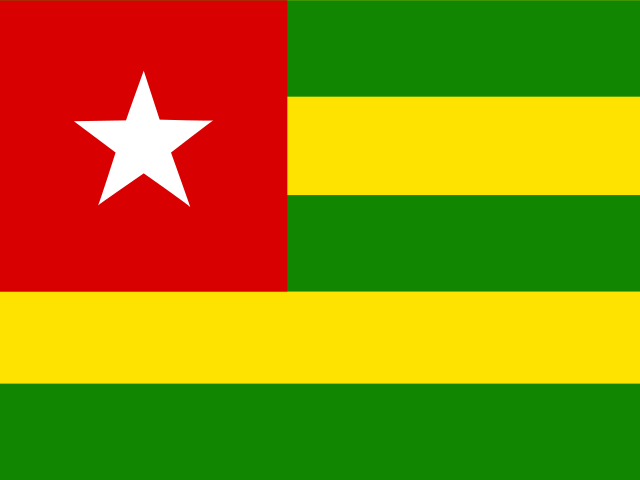
The flag of Togo is a symbol of national unity and diversity, featuring five horizontal stripes that represent the five original administrative regions of the country. A white five pointed star in the red canton is known as the star of hope, signifying life, liberty, and the guiding light of the nation. The design reflects the country's transition to sovereignty and its aspirations for a peaceful and prosperous future.
Colors & Symbols
Green represents the nation's agriculture, forests, and the hope of its youth, while yellow signifies mineral wealth and the belief that prosperity is achieved through hard work. The red canton symbolizes the blood shed by martyrs during the struggle for independence and the values of charity and fidelity. White is used for the star to denote purity, peace, and wisdom.
Adopted 1960
Proportions 1:1.618 (The Golden Ratio)
Download
Country Statistics
Capital Lomé
Population 8.1M
Region Africa
ISO-2 TG
Neighboring Flags

Flag History
Designed by the renowned Togolese artist Paul Ahyi, the flag was officially adopted upon the nation's independence. Before this design, the territory used a green flag with two stars representing the northern and southern regions under French administration. The modern version reduced the stars to one to emphasize a single, unified national identity.
Frequently Asked Questions
Togo's current flag was officially adopted on 1960.
Togo's flag has an official proportion of 1:1.618 (The Golden Ratio).
The flag was designed by Paul Ahyi, who is considered one of the greatest African artists of the modern era.
Togo is one of the few countries in the world to use the golden ratio for its official flag proportions.
The flag features five horizontal stripes alternating between green and yellow.
The colors include green for agriculture and hope, yellow for mineral wealth, red for the blood of patriots, and white for peace.