
Flag of Kosovo
🇽🇰
Flag Meaning
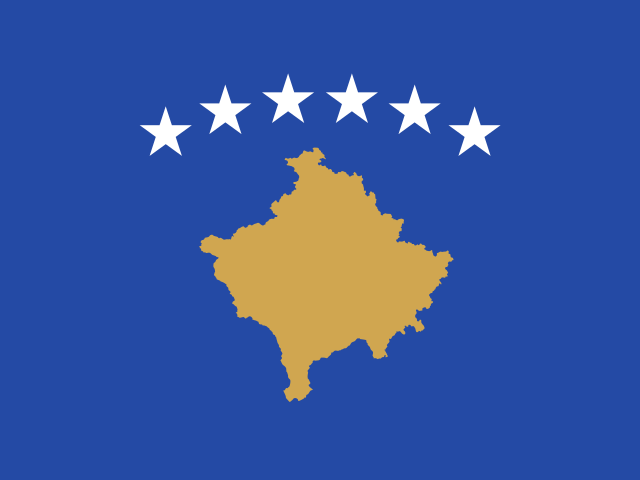
The flag of Kosovo features a golden silhouette of the country's map centered on a blue background, topped by an arc of six white stars. These stars represent the six major ethnic groups inhabiting the territory: Albanians, Serbs, Turks, Gorani, Roma, and Bosniaks. The design is intended to symbolize a unified, multi-ethnic state and the peaceful coexistence of all its citizens.
Colors & Symbols
The blue field represents the nation's aspirations for European integration and mirrors the colors of the European Union. Gold is used for the map to signify the wealth and prosperity of the land, while the white stars represent peace and the equality of the various ethnic communities. This color palette was specifically chosen to remain neutral and avoid the traditional red, black, and white colors associated with specific ethnic groups in the region.
Adopted 2008
Proportions 5:7
Download
Country Statistics
Capital Pristina
Population 1.6M
Region Europe
ISO-2 XK
Neighboring Flags

Flag History
The current design was chosen through an international competition organized by the United Nations-backed government, which received nearly one thousand entries. The winning entry, created by Muhamer Ibrahimi, was selected because it successfully avoided ethnic symbols like the double-headed eagle to promote national unity. Prior to this, the territory used the United Nations flag for official purposes during its period of international administration.
Frequently Asked Questions
Kosovo's current flag was officially adopted on 2008.
Kosovo's flag has an official proportion of 5:7.
The stars represent the six major ethnic communities in the country, which are the Albanians, Serbs, Turks, Gorani, Roma, and Bosniaks.
Kosovo and Cyprus are currently the only two countries in the world that feature a map of their territory on their national flags.
These colors were selected to symbolize the country's European identity and its desire for peace, while gold reflects the natural wealth and resources of the land.
The flag was designed by Muhamer Ibrahimi, whose submission won a public design contest held shortly before the declaration of independence.